Private Equity firms often find it challenging to find CEOs for Europe’s Asset-Light Pharma Services (ALPS) companies. The sector has few sizable players, let alone many are Owner/Founder led, leaving a very small pool of candidates ready to step in and hit the ground running. As a result, investors need to think creatively, look beyond the CV, and consider candidates with a relevant, but not necessarily identical, career track. That begs the question: Where to find, and how to pick your exit CEO?
We analyzed CEO profiles in European ALPS between 2020 and 2025, comparing those who exited a business during their tenure with those who did not. Our major conclusions:
We hope these insights equip PE firms with a clearer roadmap for identifying, evaluating, and ultimately securing the leaders who can deliver a high-value exit.
Introduction
Introduction
Leadership choices are a key lever for value creation in Private Equity (PE). In pharma services, finding the right leader has become essential for operational agility, long-term scalability, and the exit readiness of the business.
Partially driven by higher interest rates, as investors have shifted toward asset-light business models that service pharmaceutical players in the areas of commercialization, consulting, market access, and contract research, the scarcity of proven leaders became more evident. With the PE-backed ALPS model relatively nascent in Europe, there is a limited pool of CEOs with prior exit experience. In turn, investors are increasingly seeking to understand which backgrounds truly correlate with successful outcomes.
To bring more clarity, we analyzed 30 PE-backed ALPS businesses in Europe (including select US headquartered companies with strong European operations).* We examined whether an exit occurred between 2020 and 2025 and reviewed the CEO profiles in place leading up to that outcome. Our goal was to identify patterns among “exit CEOs” and challenge assumptions that may unnecessarily narrow the talent pool or derail finding the right fit.
* This review was strictly outside-in, looking at experience and career data, not evaluating CEOs based on their competencies or leadership potential.
Market Trends Shaping the Pharma Services Sector
Market Trends Shaping the Pharma Services Sector
Pharma services encompass the supplier ecosystem servicing pharma companies across the entire life cycle: from early stage discovery and regulatory strategy via development and manufacturing, to commercialization and distribution. While Contract Development and Manufacturing Organizations (CDMOs) and clinical trial providers have historically dominated investor attention, there has been increasing focus on the evolving segments such as site management organizations, consulting, regulatory and access services, as well as commercialization or full representation solutions.
Over the last 3–4 years, PE interest in the healthcare sector has surged, with approximately 110 deals in the third quarter of 2024, the highest quarterly figure since late 2021. Deal flow remained strong in 2025, though slightly softened due to macro factors such as interest rates and regulatory uncertainty. Looking ahead to 2026, momentum is expected to continue, with talent strategy emerging as a key differentiator in scaling platforms across fragmented, high-growth niches.
This reflects the structural reality of the sector. In asset-heavy parts of the value chain, competitive advantage often comes from technology and operational efficiency. In asset-light models, where tangible assets play a smaller role, leadership quality and human capital become key drivers of value creation and successful exit outcomes.
The Investors’ Perspective on Talent in ALPS
The Investors’ Perspective on Talent in ALPS
Across our work with Private Equity investors, several consistent themes have emerged regarding what it takes to lead in pharma services. Their reflections highlight both the opportunities and the constraints shaping leadership strategies in Asset-Light Pharma Services (ALPS).
- Domain knowledge is paramount
In ALPS, particularly those under USD 500 million in revenue, CEOs often serve as both strategic leaders and operative executives. This demands someone who’s able to zoom in and zoom out, functioning successfully at both the strategic and operational levels, being hands-on and visionary—a rare combination in the world of blue chips but essential in the pharma services space. Here, we deal with numerous small-to-mid-sized entities and solving business challenges requires being involved operationally, which calls for knowing the nuances of the industry. - Leaders need to be grounded in commercial realities
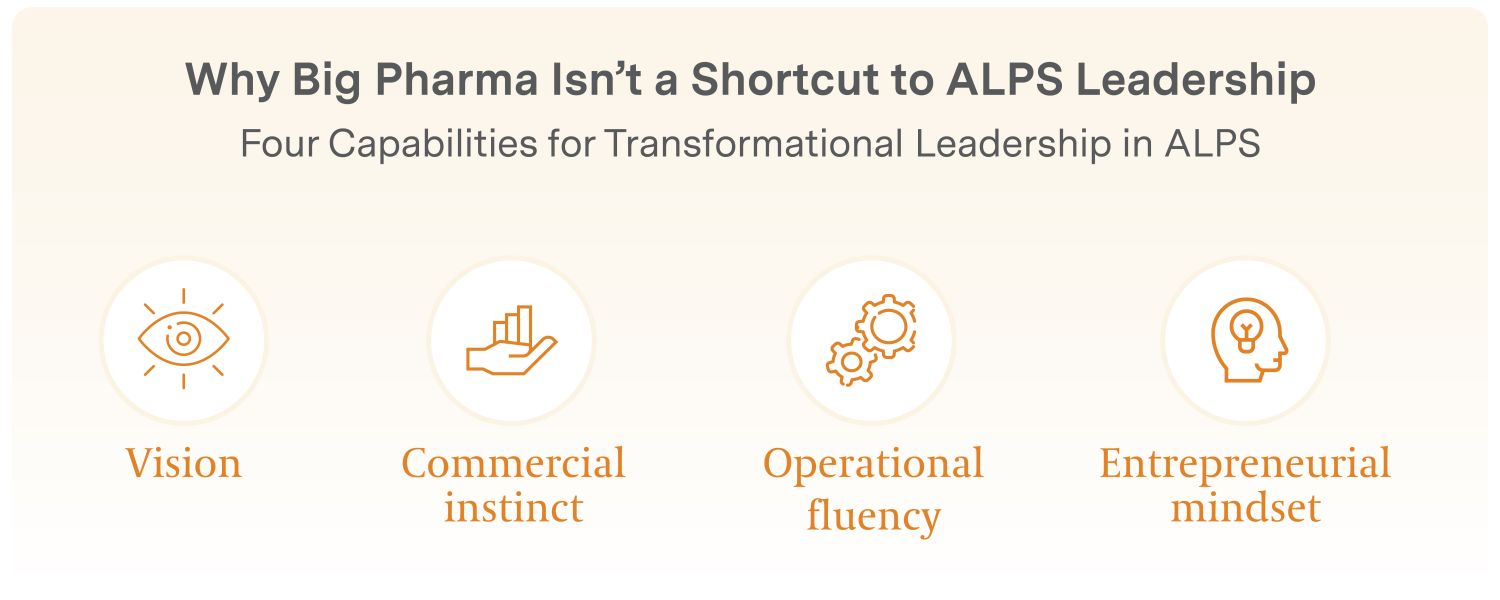
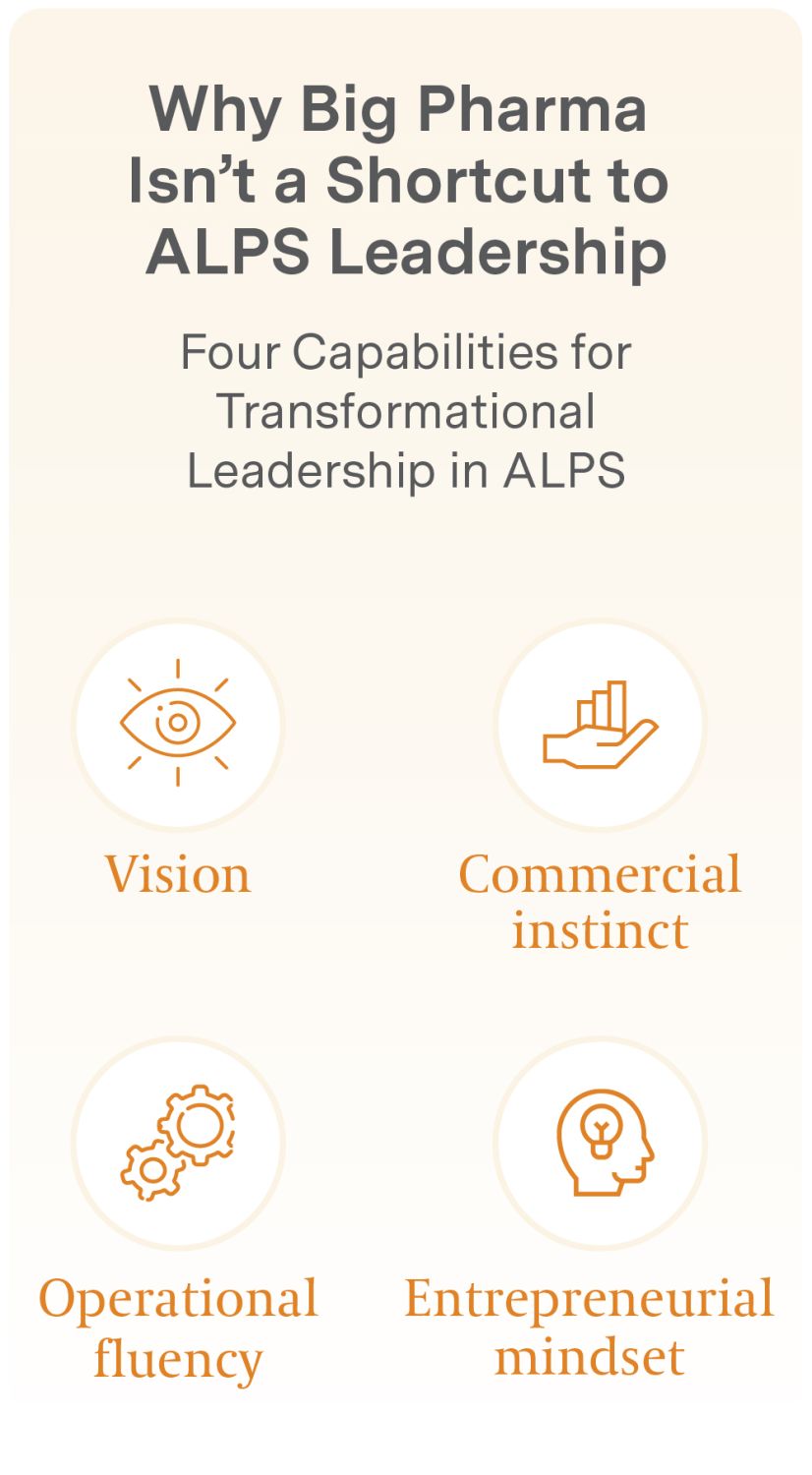
Investors consistently note the difficulty of sourcing leaders who can bridge two different worlds: bringing scientific and technical depth on the one hand, and commercial instinct on the other. They may be against hiring leaders without the necessary grounding in the sector’s commercial realities. Traditional pharma careers, however, offer valuable experience on one path but rarely combine both. The size of companies adds to this aspect, too. Pharma, especially big pharma, includes sizable organizations. People who were socialized in such environments tend to lack the operational fluency, dynamism and the entrepreneurial approach required in pharma services. They are not always able to switch to the supplier side of the business, which comes with lower margins and the necessity to move faster and be nimble. - Transformation demands adaptive leadership
As portfolio companies pivot—divesting legacy assets, expanding into emerging markets like India, and embracing data science and AI—investors look for CEOs who can lead through change. Cultural sensitivity, strategic agility, and a bias toward commercial outcomes are seen as essential, particularly in smaller deals where leadership impact is magnified.
How to Select an “Exit CEO” for Asset-Light Pharma Services?
How to Select an “Exit CEO” for Asset-Light Pharma Services?
Our five-year analysis of CEO profiles across 30 PE-backed ALPS companies in Europe, comparing those who exited a business during their tenure with those who did not, reveals consistent patterns among the CEOs who successfully led their companies to an exit. These insights can help PE investors broaden and sharpen their criteria when evaluating potential CEOs for exit-oriented strategies.
1. Direct Domain Experience Has Supported Exit Outcomes
1. Direct Domain Experience Has Supported Exit Outcomes
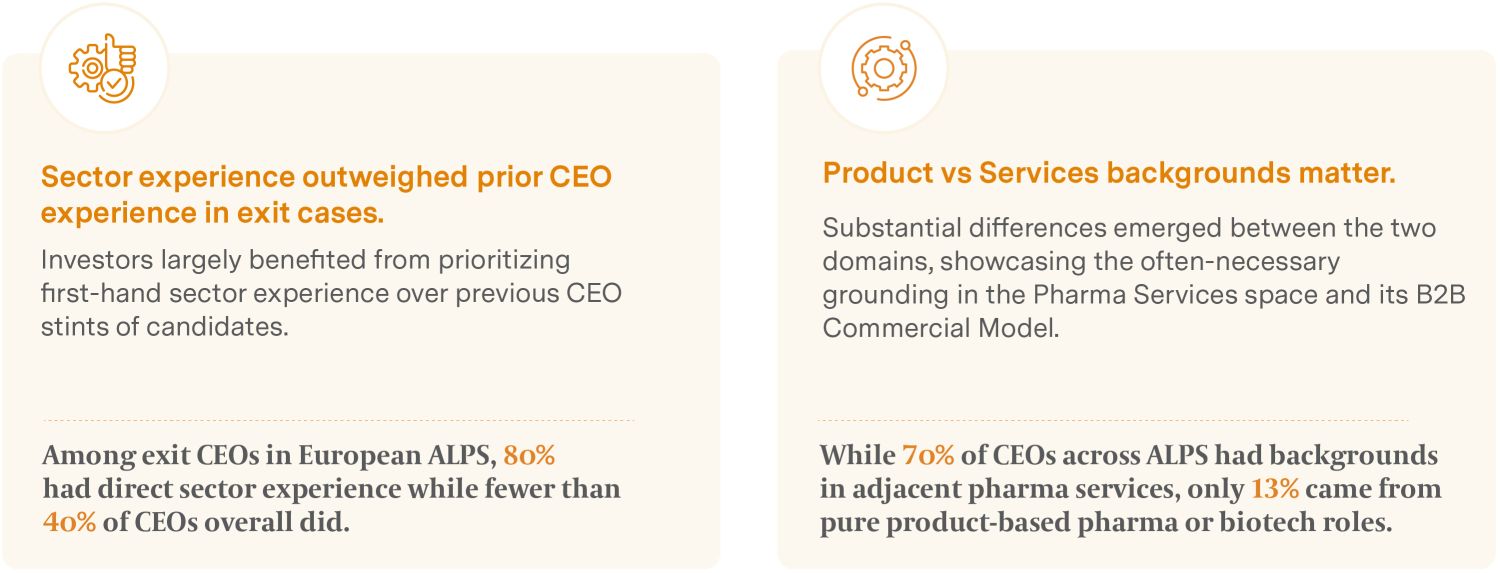
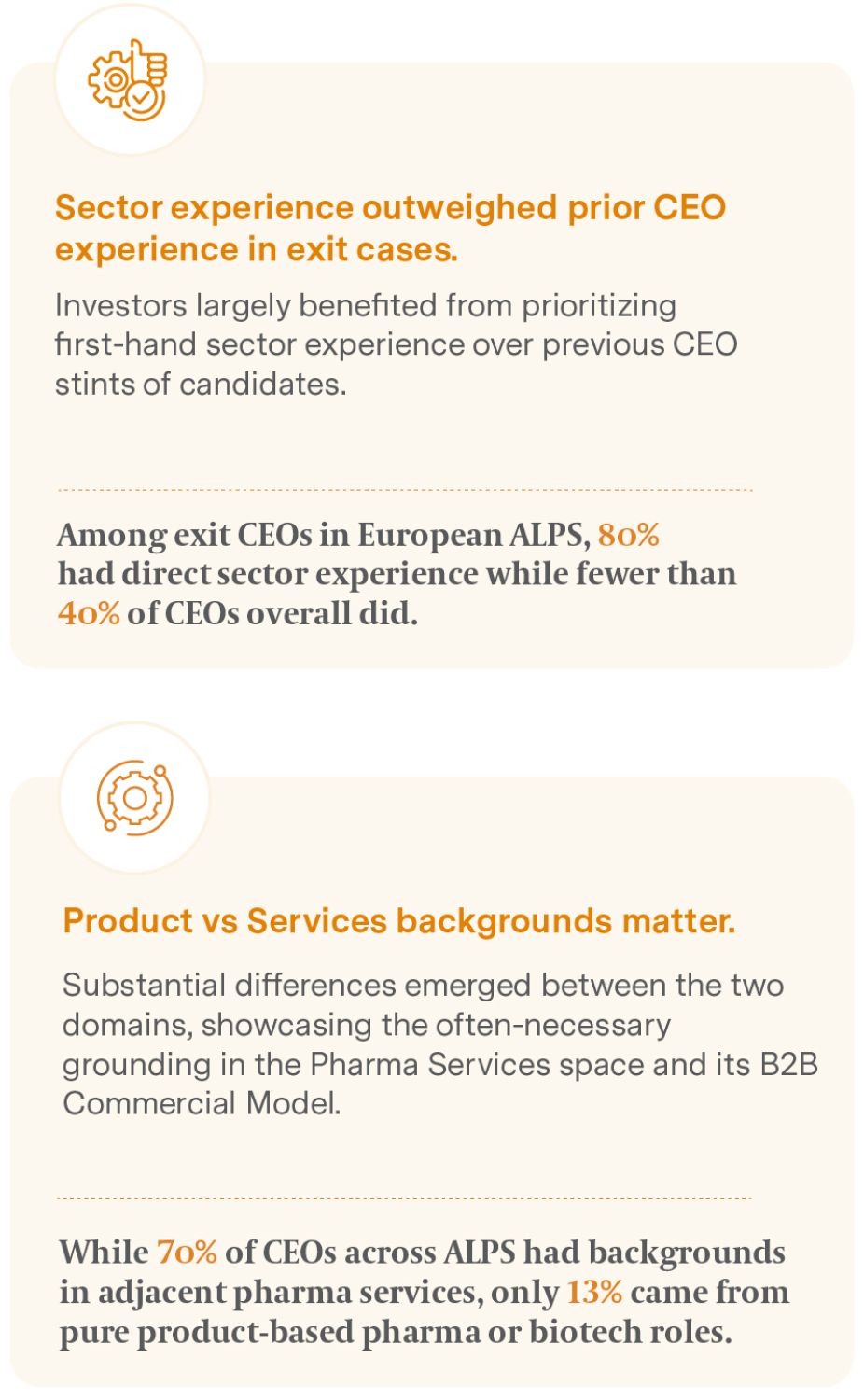
CEOs with direct experience in the core service area of the respective business, whether market access, medical communications, or specialty distribution, had far higher exit rates.
- Fewer than 40% of CEOs in the full dataset have direct domain experience
- For exit CEOs, 80% had direct experience
Insight
Investors should therefore consider leaders with practical exposure to the company’s specific service model, even if their previous organizations were smaller or less polished.
2. Adjacent Pharma Services Experience is Preferable to a Pure Product Background
2. Adjacent Pharma Services Experience is Preferable to a Pure Product Background
When direct experience is scarce, adjacent pharma services sectors (e.g., CROs, HEORs, CDMOs, packaging, etc.) offer a more robust talent pool than the product-centered pharmaceuticals and biotech industry.
- 70% of CEOs in ALPS businesses have adjacent pharma services experience, a pattern that holds true for exit-CEOs as well.
- Product-focused CEOs are generally rare: only 13% of executives in the full sample came from pure product backgrounds, with a 50% rate of leading their companies to an exit.
Insight
When exit is the priority, investors should consider executives with a proven track record in adjacent services domains rather than ‘products-only’ pharma executives.
3. Prior CEO Experience Is Not a Prerequisite for Success
3. Prior CEO Experience Is Not a Prerequisite for Success
Focusing on the exit cases analyzed, only four CEOs had brought prior CEO experience, out of which two brought divisional and not end-to-end P&L Number 1 experience.
- Only 4 exit CEOs had previous CEO experience
- For non-exit scenarios, seven CEOs had been CEO before
- Only 35% of CEOs in PE-backed ALPS businesses had prior CEO experience
- And just 16% had led a PE-backed company prior to their appointment
Insight
Investors don’t need to focus on finding a former CEO, as the data suggests. Many successful exit CEOs were first timers, chosen, among other things, for their sector expertise and functional leadership.
4. While External Hires are the Default, Internal Succession Can Be an Advantage in Certain Exit Scenarios
4. While External Hires are the Default, Internal Succession Can Be an Advantage in Certain Exit Scenarios
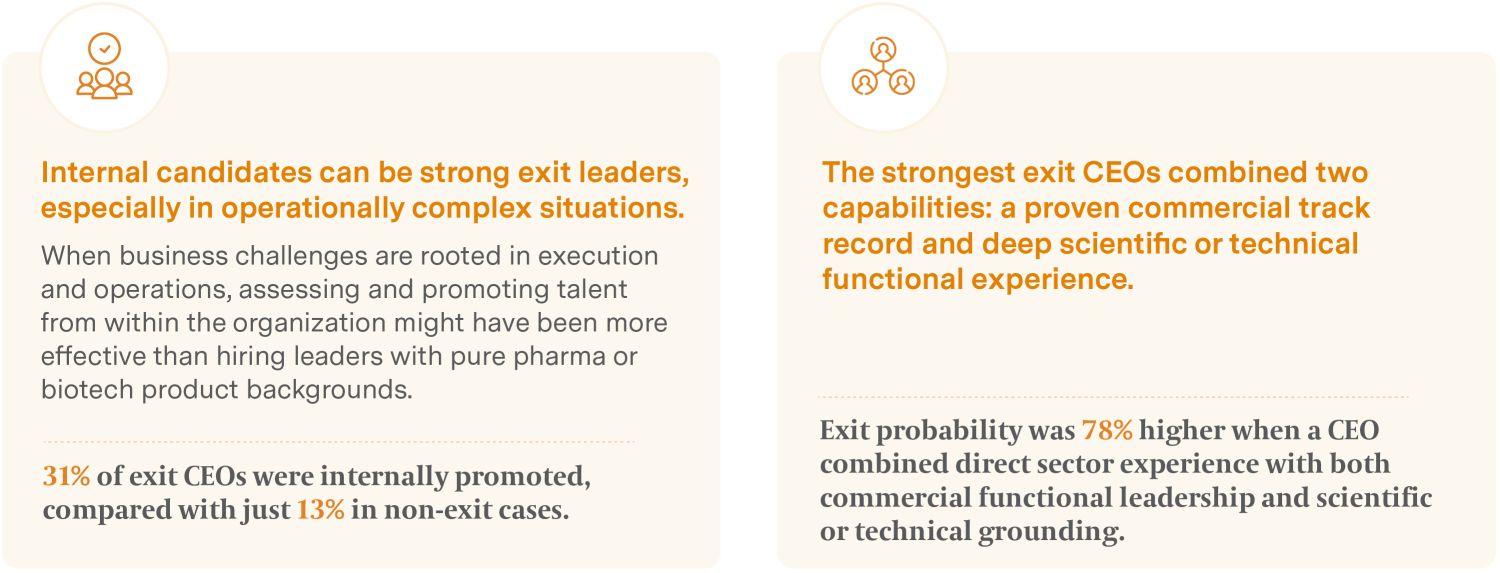
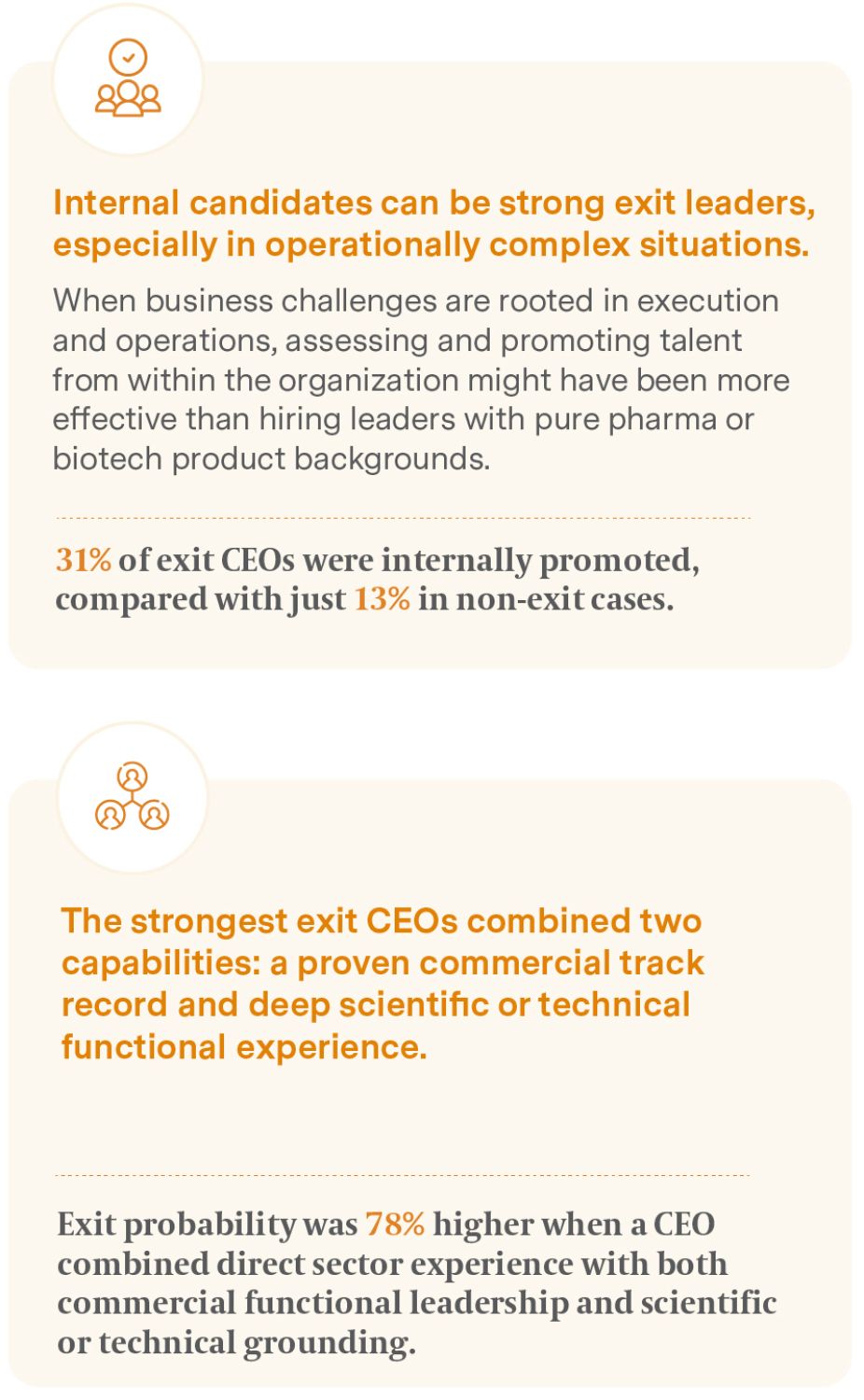
External hires remain the dominant pathway, with over 70% of CEOs appointed from outside the organization in the past five years. However, internal promotions can become an interesting choice to consider.
- 31% of exit CEOs were internally promoted
Insight
Continuity, cultural alignment, and institutional knowledge can be valuable assets in an exit CEO candidate. Therefore, it can be worthwhile conducting a systematic assessment of potential internal successors, with special emphasis on developmental areas taking into consideration the more complex responsibilities of a CEO.
5. The Winning Profile: Commercial Acumen and Technical Credibility
5. The Winning Profile: Commercial Acumen and Technical Credibility
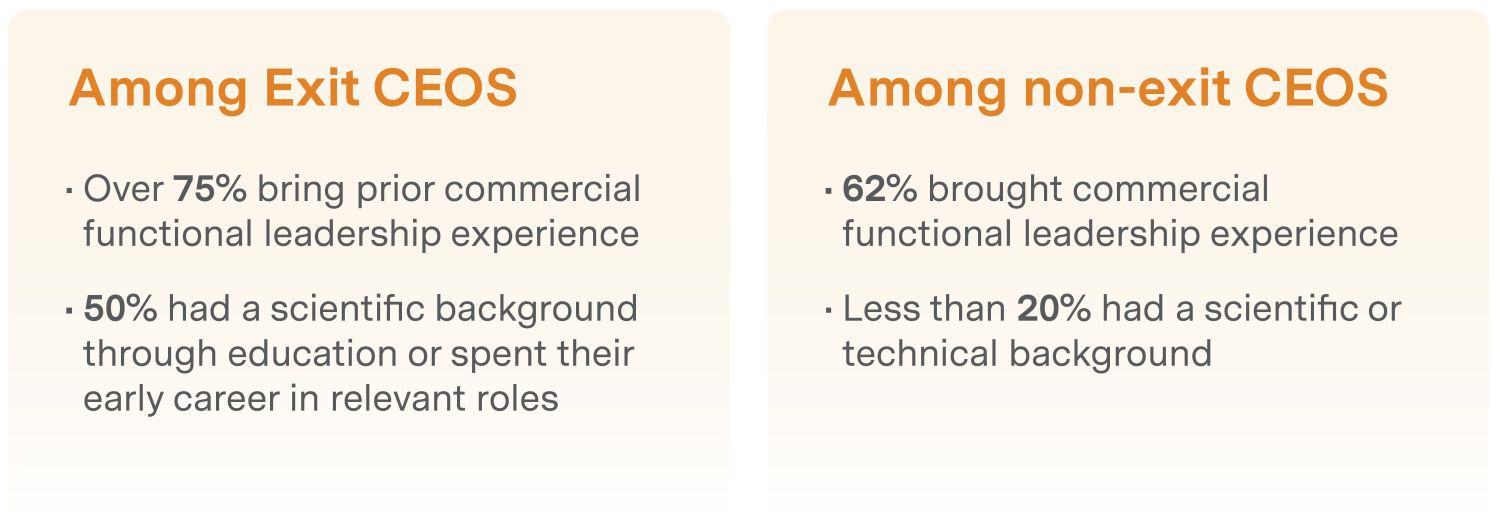
The most successful CEOs in ALPS combine deep commercial functional leadership, particularly in customer-facing roles, with a foundation in scientific education and an early career spent in technical or scientific roles.
Insight
This dual capability of connecting deeply with customer needs while understanding the technical landscape is potentially a hallmark of successful leadership in pharma services. Investors should prioritize candidates who bring a blend of commercial leadership with scientific grounding, even if they haven’t previously held the CEO title.
The Leadership Formula Behind a Successful Exit
The Leadership Formula Behind a Successful Exit
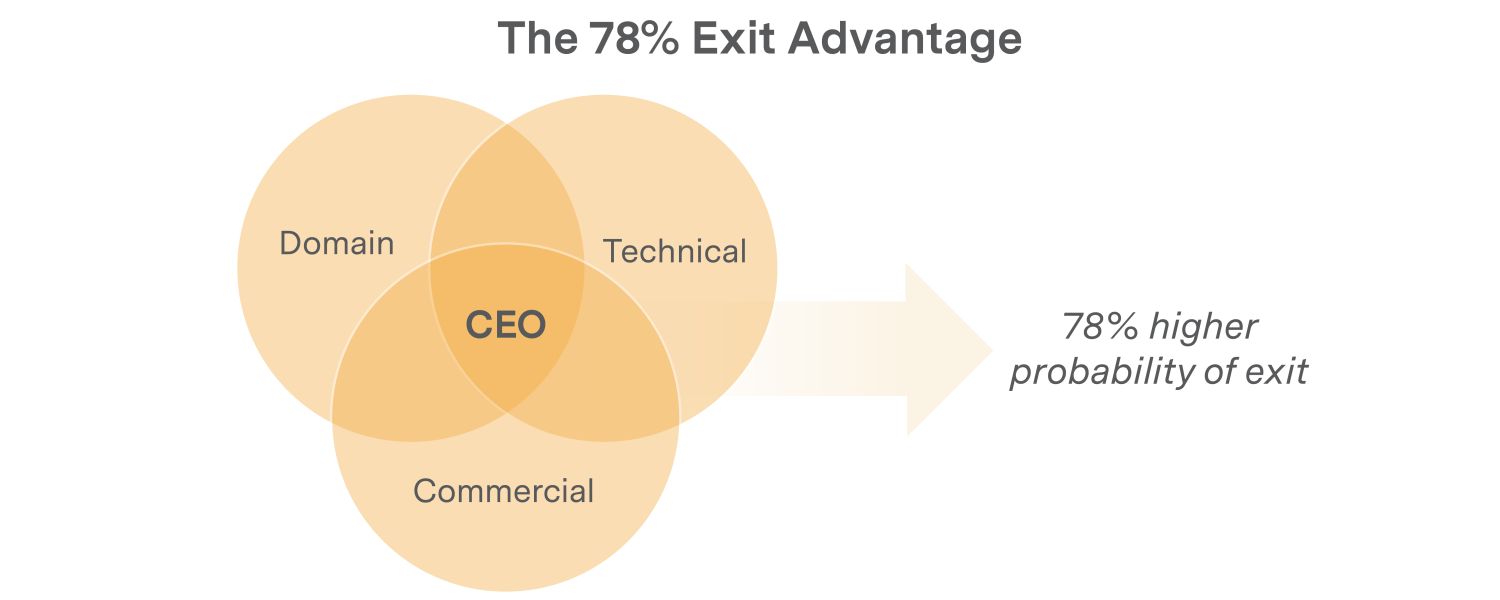
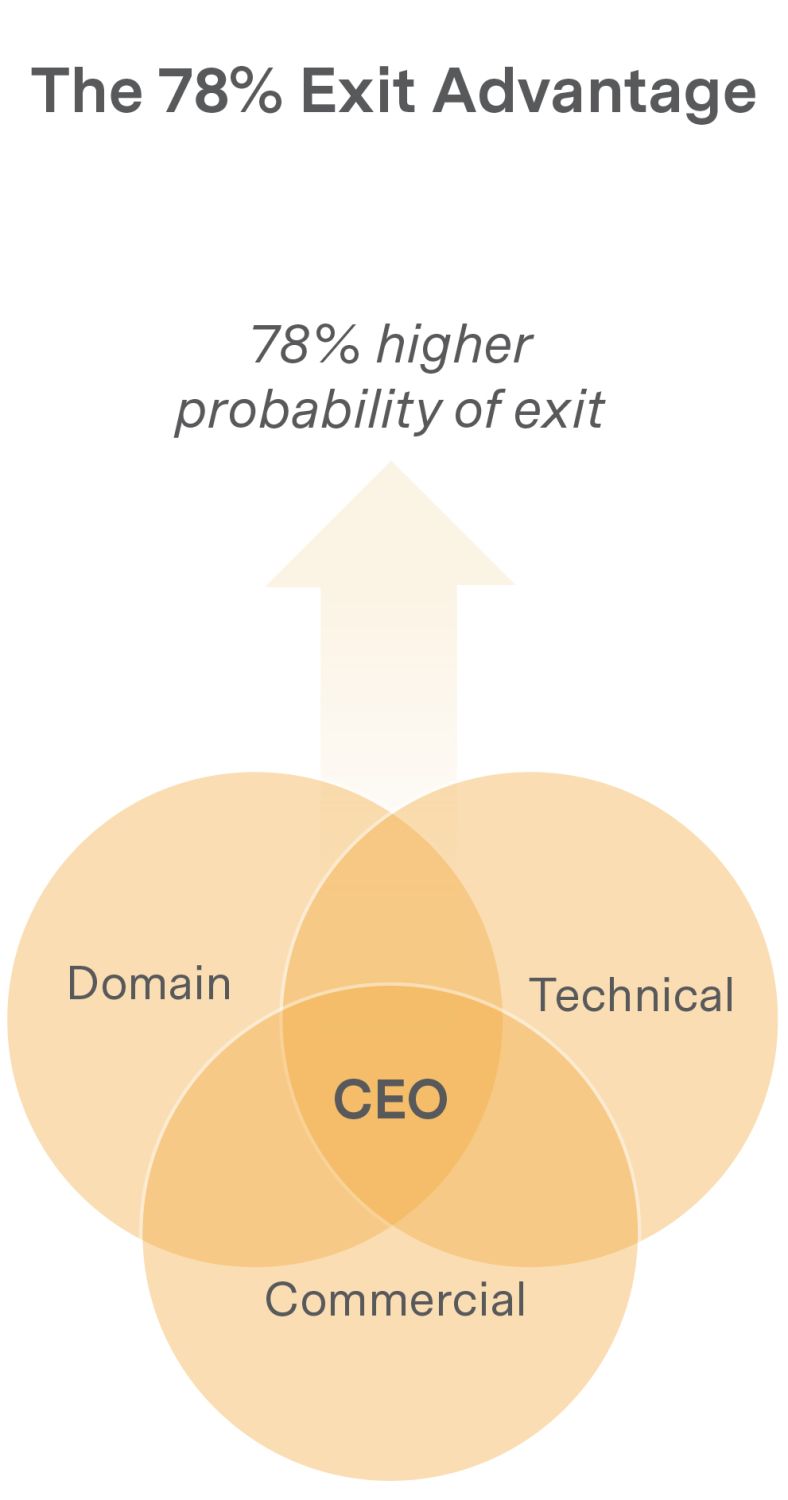
Our analysis shows that CEOs who combined direct sector experience, either by being promoted an internal candidate or bringing an external perspective from industry, combined with the dual track record of commercial leadership and scientific / technical upbringing increased the probability of an exit by 78%.
This data aligns well with our team’s own experience from conducting several CEO searches in this space. A previous CEO title or previous PE exposure can be overvalued, while potentially more relevant attributes that are required to successfully lead an ALPS may become overlooked or deprioritized.
Selecting the right CEO is never an easy task. It requires careful consideration of experiential fit, readiness, leadership skills and other traits, as well as future potential. But in the ALPS context, one pattern is clear: leaders who deeply understand the segment and bring a strong combination of commercial and operational understanding appear best positioned to guide these businesses through the pivotal chapters of their growth and exit journey.