



In Europe’s healthcare sector, the role of the Chief Human Resources Officer (CHRO) is being redefined. Faced with a critical workforce shortage, increasing regulatory complexity, and the rapid evolution of care delivery models, healthcare organizations are rethinking not only what leadership looks like, but also who is best equipped to drive it.
CHROs have long been the architects of CEO succession, guiding boards through some of the most consequential leadership transitions. Yet when it comes to their own succession, the path is often less structured, less visible, and far more varied.
To better understand this dynamic, we analyzed 98 CHRO appointments across the European healthcare industry over the past five years—most companies analyzed have revenues above $5 billion, with 38% falling below that threshold.
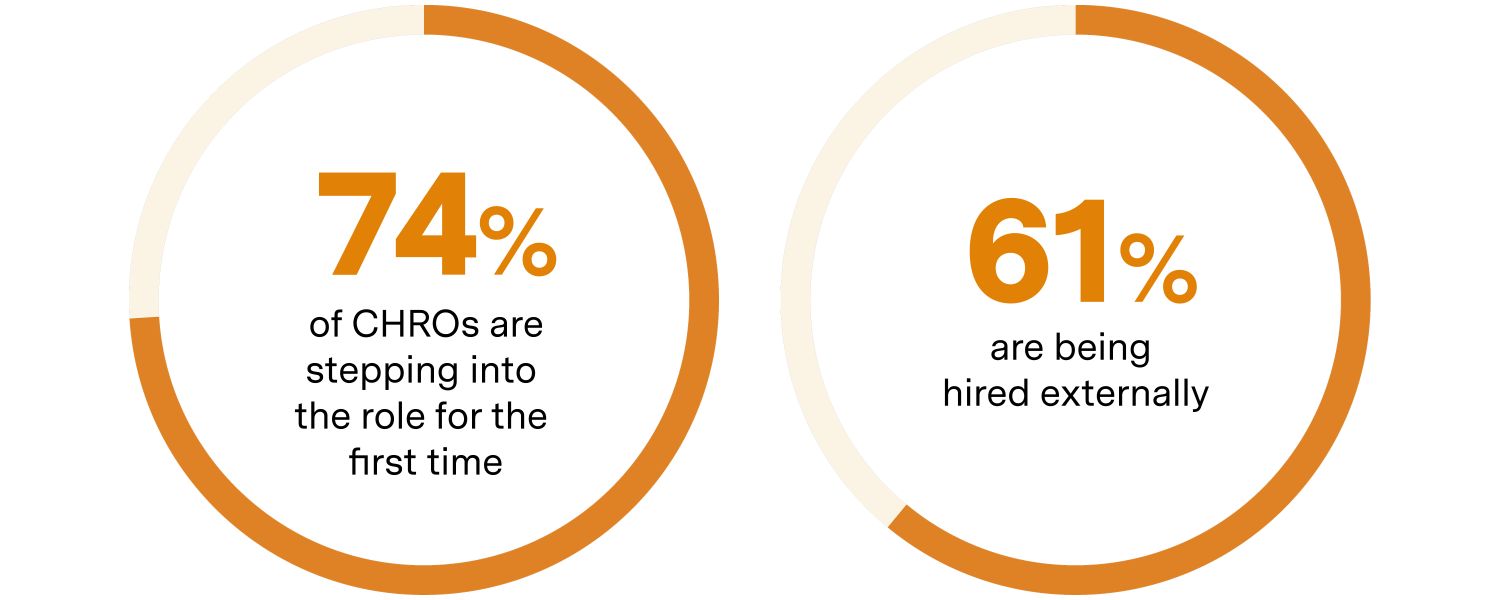
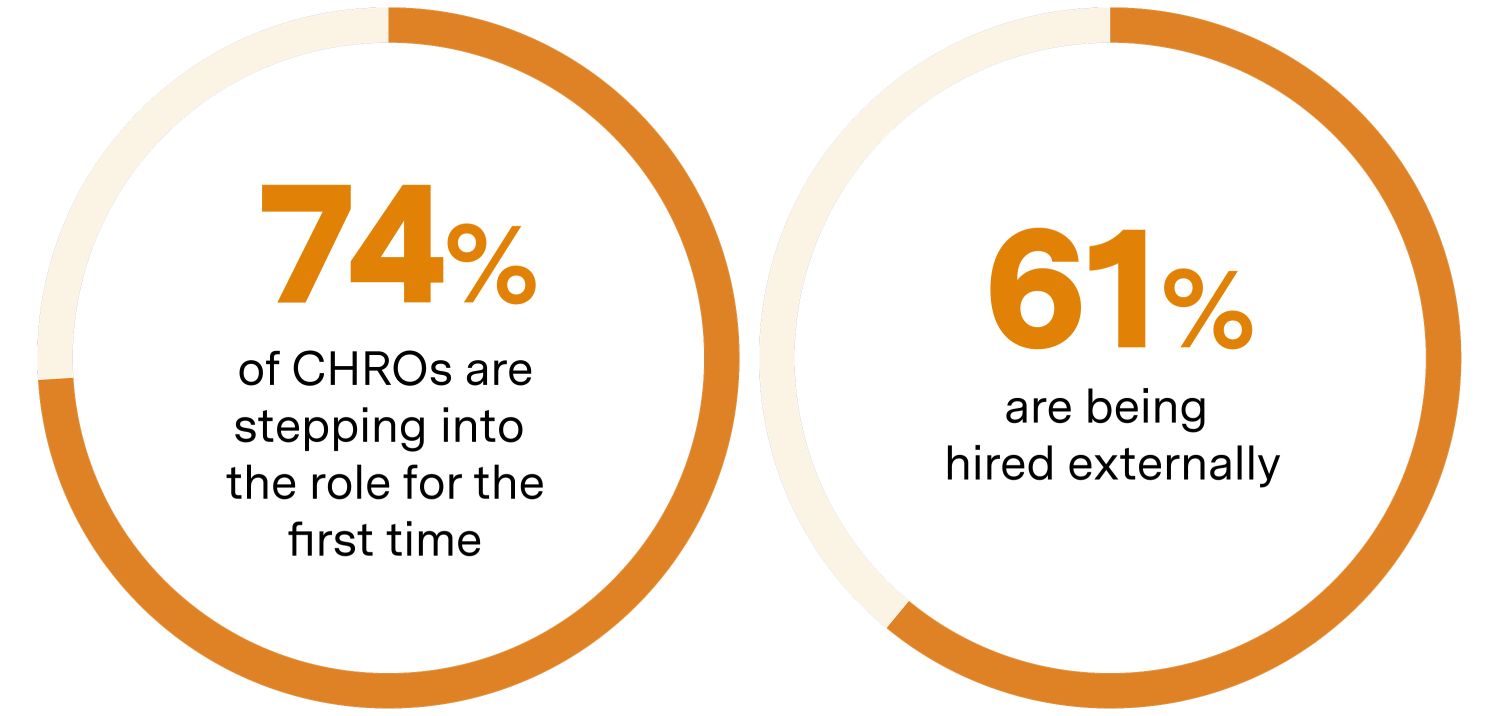
The findings are striking: 74% of CHROs are stepping into the role for the first time, and 61% are being hired externally. This signals a trend that organizations are increasingly looking beyond the known and familiar—either externally or from more junior ranks—in a time of rapid change.
In this article, we examine what this means for the future of HR leadership in healthcare and how CHROs should prepare for succession—not only of their C-suite peers but also of their own role.
Why Healthcare Is Different—and Why It Matters
Why Healthcare Is Different—and Why It Matters
Healthcare is unlike any other sector. It is highly regulated, deeply mission-driven, and operationally complex. The workforce spans clinical, technical, and administrative domains, often under intense pressure and scrutiny.
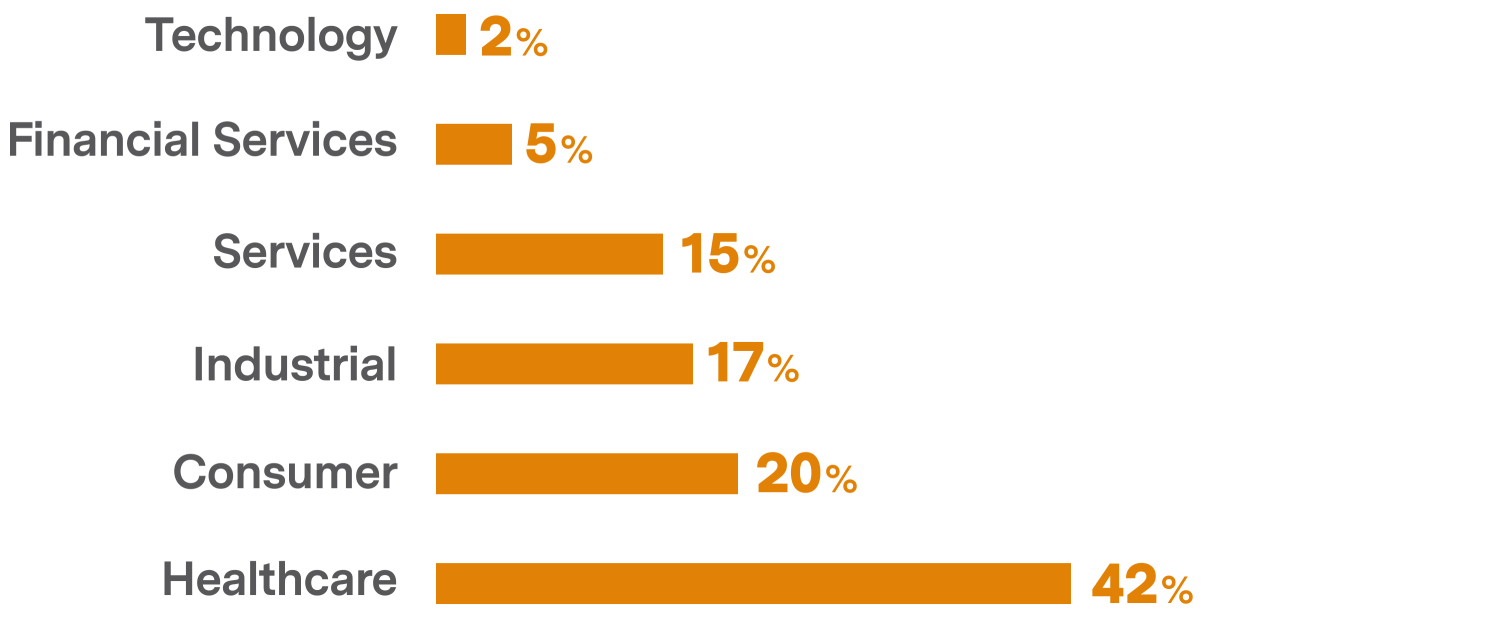
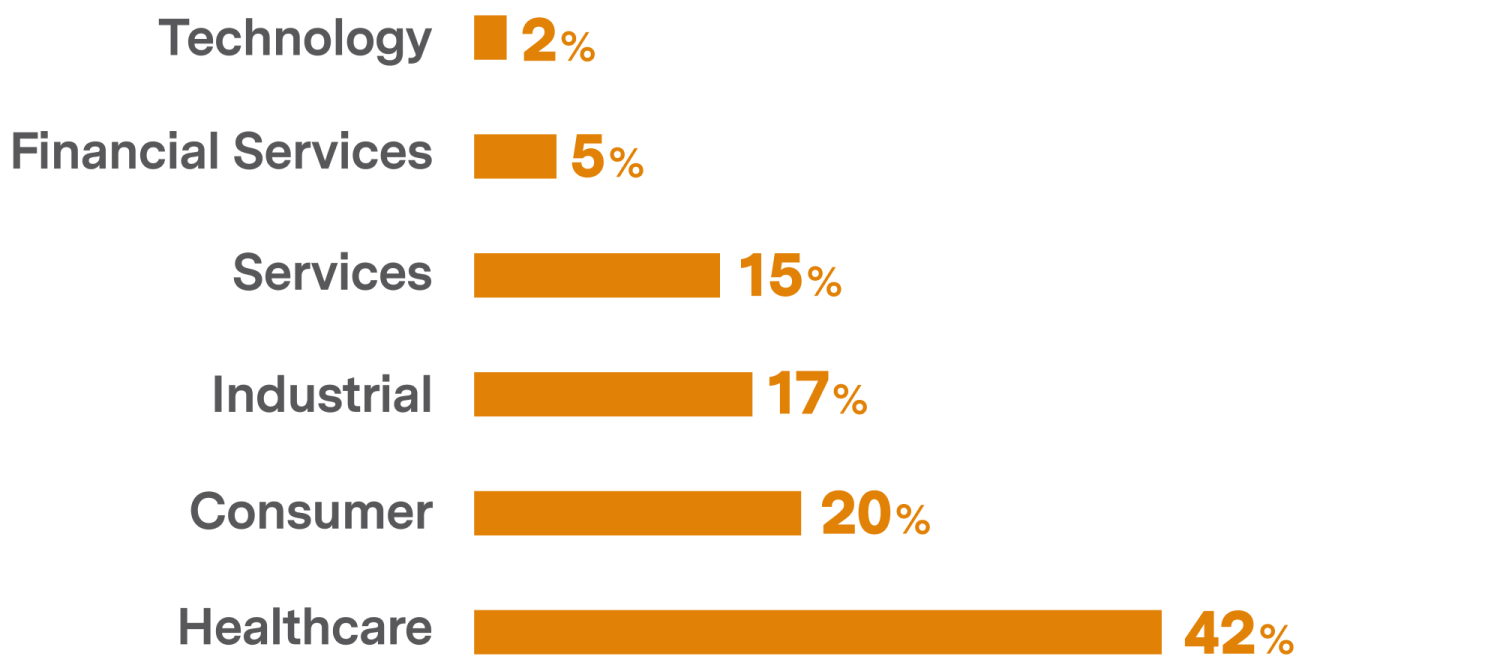
Our data reveals that 42% of CHROs in healthcare come from within the industry, far more than any other sector. This suggests that growing within the healthcare sector equips CHROs with the specialized expertise needed to navigate its complexity, from regulatory compliance to workforce dynamics. Organizations appear to value this deep, sector-specific experience when selecting HR leaders.
Industry Background of CHROs in European Healthcare: Percentage with Prior Experience in Healthcare vs. Other Sectors
Industry Background of CHROs in European Healthcare: Percentage with Prior Experience in Healthcare vs. Other Sectors
Percentage of CHROs with prior experience in each industry sector
Percentage of CHROs with prior experience in each industry sector
Yet, the rise of first-time appointees, 53% of whom bring multi-industry backgrounds, suggests that organizations are increasingly open to leaders who bring fresh thinking, even if they lack deep sector experience.
First-Time CHROs: A Leadership Profile
First-Time CHROs: A Leadership Profile
The dominance of first-time CHROs is one of the most compelling findings in our analysis. Nearly three-quarters of current CHROs in European healthcare are in their first role at this level. Interestingly, 51% of these first-time CHROs were promoted internally, while 49% were hired externally, indicating a balanced approach to succession.
Companies appear willing to promote internal talent into their first C-suite roles. This may suggest a dual approach: developing internal leaders for future potential, as internal promotions signal investment in leadership development and organizational culture, while seeking external candidates depending on their specific needs such as transformation and turnover.
Experience Matters, But So Does Perspective
Experience Matters, But So Does Perspective
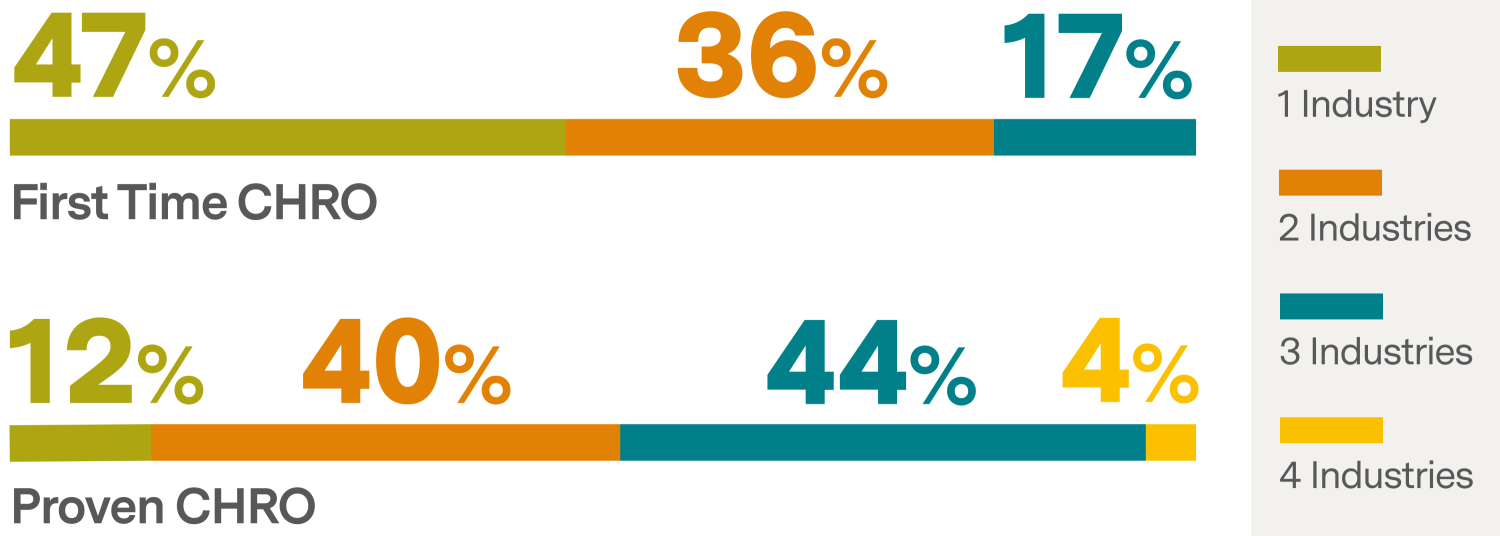
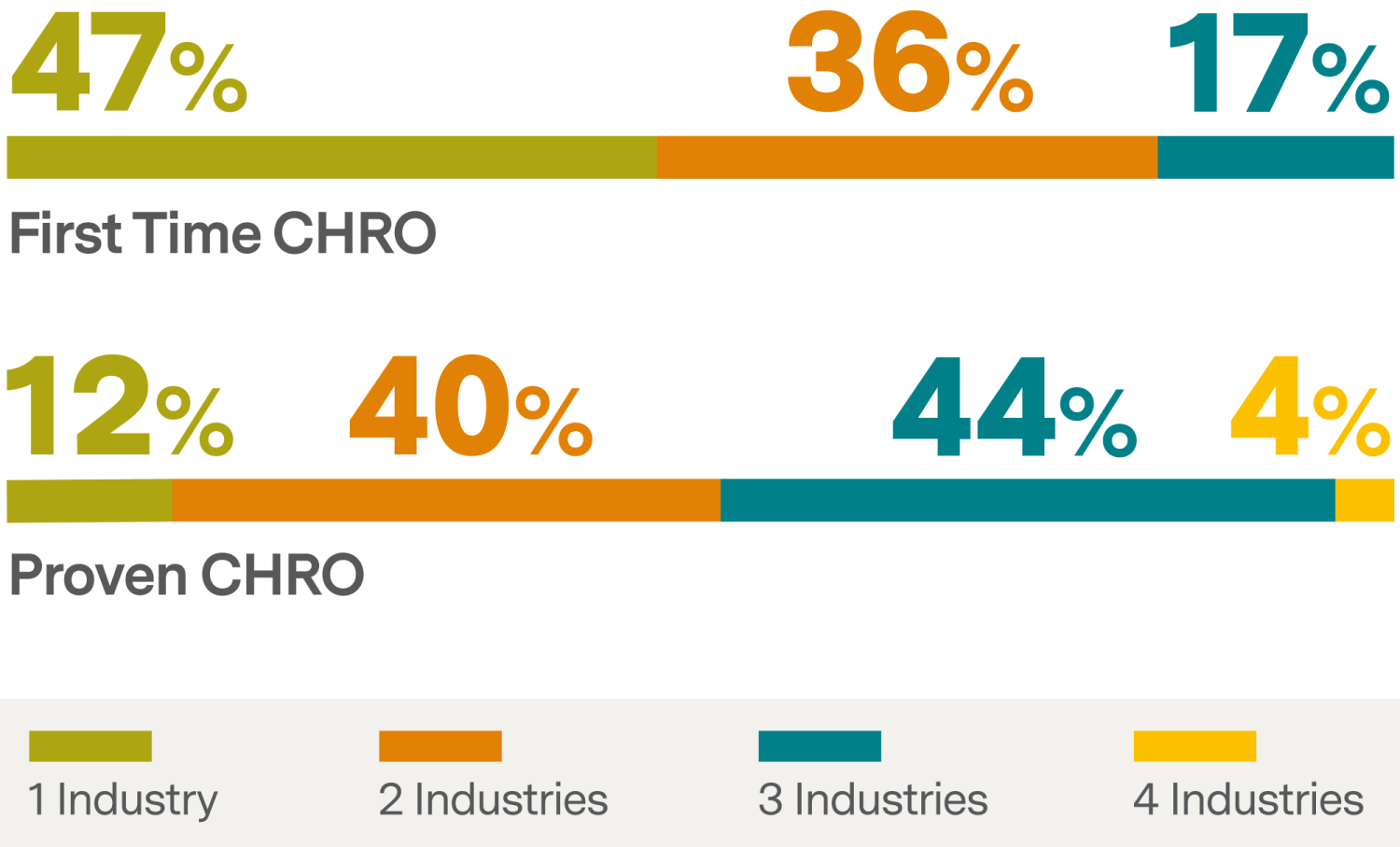
When it comes to industry experience, the contrast between first-time and proven CHROs is stark. 47% of first-time CHROs have worked in only one industry, typically healthcare. In contrast, over 80% of proven CHROs have experience across two or three sectors— most commonly consumer (20%), industrial (17%), services (15%), financial services (5%), and technology (2%).
The findings suggest that organizations appear to trust proven CHROs to navigate complexity across sectors, but when appointing first-time CHROs, they often require deep industry expertise—particularly in healthcare—to ensure readiness for the functional demands of the role.
Industry Experience of First-Time vs. Proven CHROs
Industry Experience of First-Time vs. Proven CHROs
Percentage of appointed CHROs with experience across one or more industries
Percentage of appointed CHROs with experience across one or more industries
This raises important questions for boards and CEOs: Is deep-sector expertise enough? Or should they be cultivating leaders with broader exposure to different operating models, cultures, and challenges?
Given the increasing complexity of the CHRO role and the broader environment—where CHROs are expected to be strategic partners to the C-suite, healthcare organizations may need to rethink their leadership pipelines to ensure that future CHROs are equipped not just with functional expertise and depth of experience in their sector, but with the strategic agility to lead in an increasingly complex environment.
The Age and Background of Today’s CHROs
The Age and Background of Today’s CHROs
The demographic profile of the 98 CHROs in our sample is telling. 63% are between 51 and 60 years old, and 34% are between 41 and 50. This suggests that organizations are prioritizing experience and maturity, even among first-time appointees.
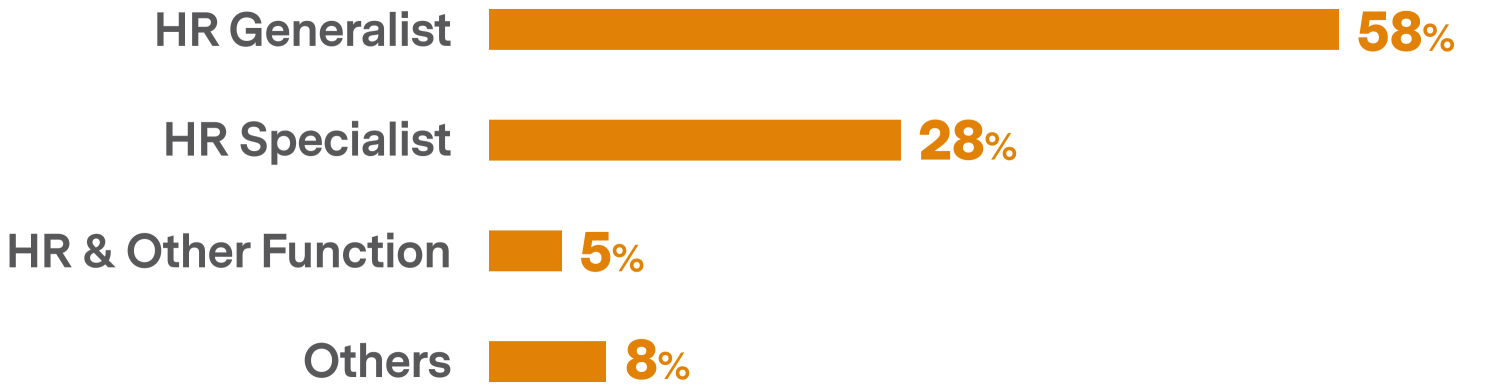
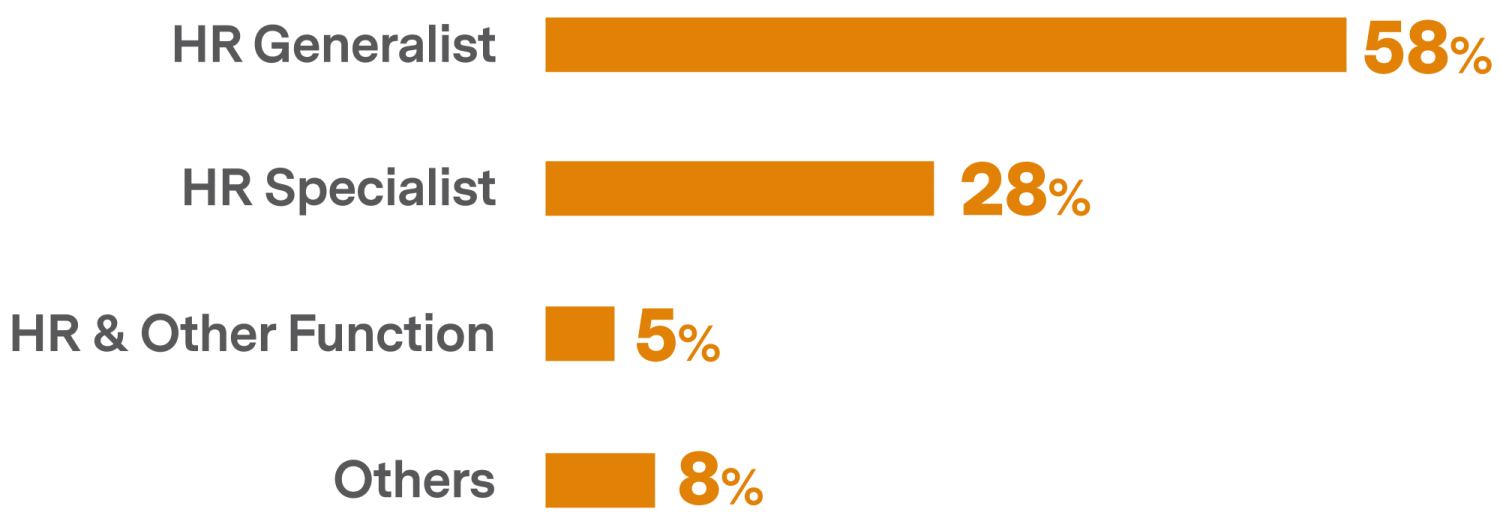
In terms of career path, 56% of CHROs come from HR generalist backgrounds, while 31% are HR specialists, typically with deep expertise in areas like compensation, talent, or organizational development. Another 11% come from outside traditional HR functions, including legal, operations, and sustainability. This diversity reflects the expanding scope of the CHRO role, which increasingly encompasses culture, strategy, transformation, ESG, and external stakeholder engagement.
Company Size and Succession Strategy
Company Size and Succession Strategy
Company size plays a critical role in shaping CHRO appointments. In larger companies with revenues above €5 billion, CHROs are more often promoted internally (58%). In companies with revenues of less than €5 billion, the majority of CHROs are hired externally (71%).
Our finding signals that bigger healthcare organizations may rely more heavily on internal succession planning, while smaller players are more open to bringing in leaders from outside the sector. Both approaches have merit, and they may have different implications on leadership development, talent mobility, and cultural integration.
What This Means for Boards and CHROs
What This Means for Boards and CHROs
For boards, the message is clear: the CHRO role is evolving, and succession planning must keep pace. Whether promoting from within or hiring externally, organizations need to ensure that future CHROs are prepared to lead in a sector that is both highly specialized and rapidly changing.
For CHROs themselves, this is a moment of opportunity. Our data shows that organizations are willing to take risks on first-time leaders, especially those who bring curiosity, resilience, and a strategic mindset. We see a value in building cross-sector experience, developing business acumen, and cultivating the ability to lead transformation.
Rethinking the CHRO Pipeline in Healthcare
Rethinking the CHRO Pipeline in Healthcare
The growing trend of first-time CHROs in European healthcare isn’t just a hiring trend—it’s a window into how organizations are evolving. Expectations are shifting, leadership needs are changing, and the traditional pathways to the top are being reimagined.
For healthcare organizations, this means rethinking how HR leaders are developed. It’s not enough to rely on legacy career paths and wait for the right candidate to emerge. Building structured development programs, encouraging cross-functional rotations, and investing in leadership pipelines are essential steps. And just as CHROs guide succession planning for the CEO and other C-suite roles, they must also consider their own. Who will step into their shoes? What kind of leader will the organization need next?
Finding that answer means looking beyond the familiar. It means recognizing potential in unexpected places, embracing diverse experiences, and preparing future CHROs to lead with empathy, agility, and a deep understanding of the people who power healthcare.
Acknowledgements
Acknowledgements
Thanks to Kanchan Kumar, Nathia Pratista and Palak Maini for research, data, and analytics support.
