Leadership in the services industry is being redefined by constant transformation, from the front line to the boardroom. Today’s leaders must be prepared to adapt to new circumstances, guiding their teams with confidence.
Rather than discussing titles or tactics, a recent conversation we held at Egon Zehnder in London with senior leaders from across the Services sector focused on the fundamentals in large services organisations: how leaders communicate; how culture sustains organisations; and how vision and belief, not hierarchy, keeps people connected. A shared truth emerged: leadership isn’t about being in charge; it’s about how you show up for others.
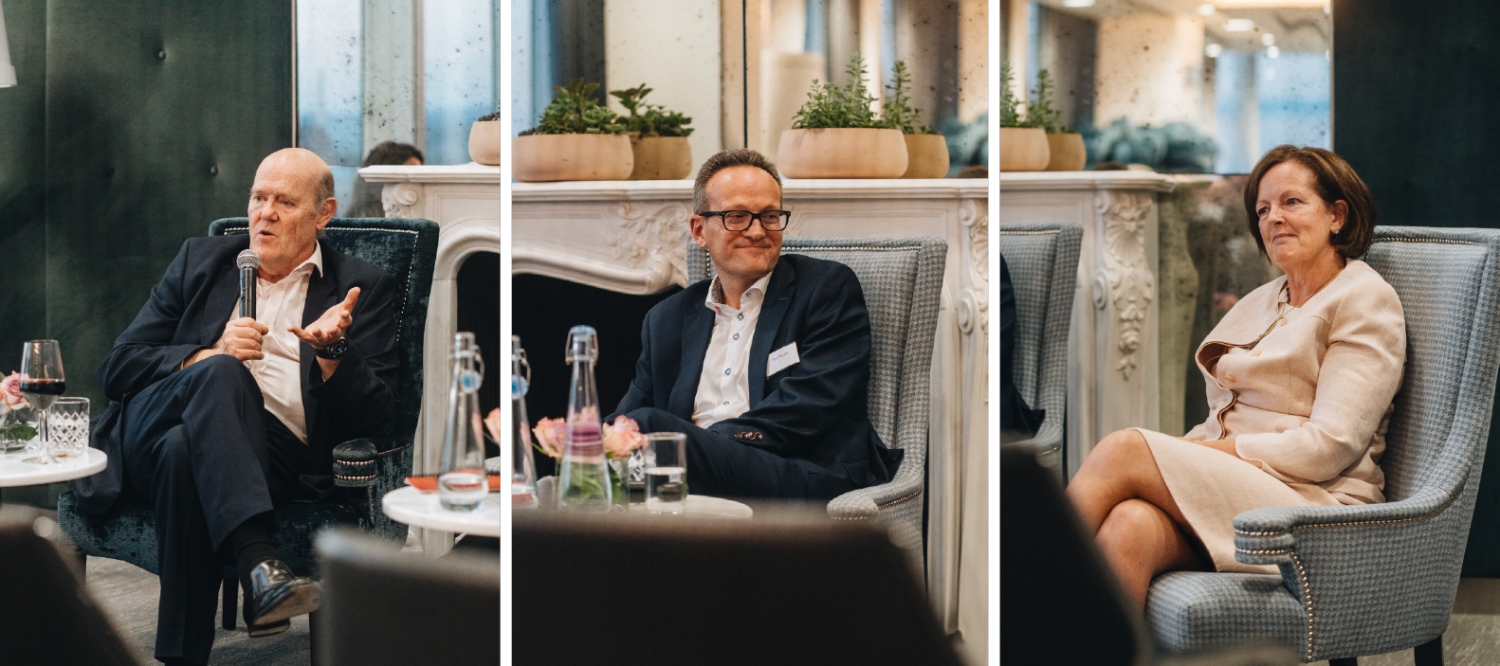
The conversation included: Rupert Soames OBE, Chair of the Confederation of British Industry and Smith+Nephew, and former CEO of Serco and Aggreko; Paul Flaum OBE, Chair of Haven Holidays and Warner Hotels; and Jill Ader, Senior Advisor at Egon Zehnder.
1. Communication Is Leadership
1. Communication Is Leadership
Language isn’t just a leadership skill; it’s leadership in practice. In service-driven businesses operating across many local sites, where thousands of employees represent the organisation daily, the way leaders speak and communicate defines the culture, engagement, and performance. “Clearly conveying purpose, vision and values is the life force energy for businesses.” It is also about obsessing about only a few things at once.
The group emphasised that effective communication means treating people like adults—speaking with clarity, respect, care, sincerity and trust. “It’s about servant leadership versus top-down.” “Story telling is also absolutely key. And creating a safe environment for people to be themselves.”
Listening is equally important – truly hearing others – is as much a form of communication as speaking. “Listening is being heard, slowing down, and being present.”
Humor and storytelling also surfaced as powerful tools. They disarm, connect, and ensure that lessons stick long after the meeting ends. “Humor is a way of landing serious points in a non-threatening way and making them more digestible”.
The key takeaway was leadership communication isn’t about charisma or performance but about conversation. Great leaders speak plainly, listen generously, and use humor to make the truth feel safe.
2. Culture Is Built in Small Moments
2. Culture Is Built in Small Moments
Culture doesn’t live in a company handbook—it lives in people’s behaviors and actions. Culture is both a strategic asset and an emotional one: it defines how people experience purpose every day, which is key in large people intensive services organisations.
Culture starts small. How managers talk to their teams, how milestones are celebrated, and how leaders show up when things get hard all add up to the greater culture.
In large and complex services organisations, that shift requires leaders to foster intimacy at scale—creating moments that matter for individuals across the organisation. Whether those moments or memories come from customer experiences or team interactions, authenticity is what makes them last.
Visibility and presence also matter. “The only time I get upset is when I find out more about a team member than their line manager does.”
The takeaway here was that leadership at any level means staying close enough to care — and that proximity is what fuels trust.
3. Belief and Humanity, Not Hierarchy, Builds Legacy
3. Belief and Humanity, Not Hierarchy, Builds Legacy
Leadership endures when it’s rooted in belief. “Belief is an even better word than hope.” When a team truly believes in the mission, it’s far more powerful than any hierarchical motivation. “Legacy isn’t just built on belief, but on the moments that make people feel human”.
Although leadership is evolving, its essence hasn’t changed. Leadership does not mean running an organisation from the top - it’s about being connected to others’ experiences.
The legacy of a leader isn’t found in strategy decks or shareholder letters, but in the culture they leave behind and the belief they’ve inspired in their team.
4. Leadership Is a Team Sport, Not a Solo Role
4. Leadership Is a Team Sport, Not a Solo Role
Our panelists challenged a persistent myth: that leadership, especially at the top as a CEO, needs to be lonely. The reality, they argued, is the opposite: loneliness in leadership often reflects a breakdown in connection. “If your relationship is lacking with your people, that’s on you. If you don't create closeness within your team, it's you. The team mirrors you.” CEOs need proper relationships with the people around them. They need to be part of their team. “They need to share their biggest problems and ask for help.”
That same mindset extends to first-time CEOs. Every leader faces uncertainty, but success depends on the network around them — the Chair, the board, and the broader team. “The whole board needs to shift, not just the new CEO.”
This perspective also redefines what companies should look for in leaders. Instead of focusing on narrow experiences, boards should seek leaders who can connect, adapt, and inspire belief.
5. Leadership Transitions Require Humility
5. Leadership Transitions Require Humility
More than anything, moving from the CEO role to the Chair seat requires a mindset shift. The discussion around these transitions revealed a powerful idea: effective leadership at the top is less about control and more about complementarity.
The role of a Chair is to fit around the CEO: to understand where they’re strong, where they need space, and where they need support. “Let go of the CEO identity. Learn when to lean in and when to step back.”
“The role of the Chair is to fit him or herself to the needs of the CEO.” It’s an act of partnership, one that requires patience, empathy, and the courage to unlearn old habits that once defined success.