We sat down with Scott Ballard, MaineHealth’s first Chief People Officer, for a conversation about what it takes to build an integrated leadership culture at scale. Ballard shared how the organization is aligning leaders around inclusive, collaborative behaviors; why dyad leadership development is essential in healthcare; how mission moments are deepening the connection between care team experience and patient experience; and why thoughtful, phased adoption of AI and automation is helping make work easier for clinicians while improving access for patients. For CHROs leading complex systems, his reflections offer a clear, practical blueprint for strengthening engagement, accelerating alignment, and enabling people to do their best work.
I’m the first Chief People Officer at MaineHealth in the organization’s history. The system formally unified in 2019, bringing nine separate hospitals together. I joined in late 2021 and was really attracted by the tremendous amount of change and opportunity created by becoming a unified health system.
We’re anchored by our large academic medical center of 700+ beds in the Greater Portland area, with surrounding hospitals in more rural communities across Maine and New Hampshire. We also have Maine Behavioral Healthcare, our own independent lab company, and our own home health and hospice organization. So we’re a fully integrated, full-service system and the largest in northern New England. It’s a big community responsibility in terms of the care we provide.
It has certainly evolved in a very positive way in terms of the breadth of the role. Operational excellence from an HR perspective is table stakes today. If that still warrants conversation in your organization, things probably aren’t going well. So those basics — remuneration, benefits, care team and labor relations — need to happen, and happen without incident, so you can focus on the higher‑impact, higher‑value activities for the organization. Whether that’s leadership development, talent development and planning, or coaching and support for our leaders and care team members. That focus on organizational effectiveness and organizational design is critically important, and I think that’s where the real impact is, particularly in a healthcare setting where it hasn’t always been the historical focus.
From a Chief People Officer perspective, if the basics are operating well, it gives you the freedom and capacity to focus on broader business challenges and be a voice beyond what people traditionally think of as HR. That, for me, is where the fun and excitement come in, and where you can really influence the organization’s thought process not just operationally, but strategically.
That's the main challenge, right? We've got everything from frontline care team members—whether a CNA, phlebotomist, or medical assistant—to registered nurses and physicians, your neurologists and cardiologists, in addition to the corporate service structure you’d see in any publicly traded organization: finance, accounting, IT, HR. It really is a very complex organization in terms of job type and makeup.
We've had to shift our mindset to think about all of that in one integrated way. Historically, we were siloed: clinical operations or clinical affairs handled things one way, then the frontline caregiver, then corporate services.
So how do we design programs that are applicable to all, regardless of setting, and recognize that we need to work together in a more collaborative, integrated manner? A great example is our leadership development training, where we combine an operations leader and a clinical leader in a dyad partnership, going through it together. They build the same vocabulary and understanding of expectations and methodologies so they can be in sync as they lead a large practice or specialty line. That shift to seeing ourselves as an integrated organization, and understanding how those parts must work together and gel, has really helped move us to a different place than we’ve been historically.
We’ve made progress, but we’re not where we want to be yet. Historically, for understandable reasons, our culture was more top-down and hierarchical, clinically and operationally. Our CEO, Andy Mueller, recognized that if we were going to be a truly integrated system, we needed a more engaging, collaborative culture, solving problems closest to where they occur with people who know the work best.
The journey started with getting the right leaders in place, not because prior leaders lacked skill, but because the organization had evolved. We put inclusive, collaborative leadership behaviors at the top of our priorities. That has been the driving force behind the change. Then we built structures around that: leadership development, the right organizational design, transitioning to a regional operating model rather than local systems.
We also rolled this out top-down and in phases, starting with VPs and above, then directors, setting clear expectations. People now see we’re serious about engagement, about culture, and about accountability for behavior. That’s where the traction is coming from.
Yes, and one of my favorite practices is our “mission moments.” At certain board and leadership meetings, we start with a patient story or an example of outstanding care or research. It’s recognition, engagement, and a reminder of why we’re here.
We’re now building a system that correlates care team experience with patient experience in clinical areas, which we believe is critical. We’ll be able to demonstrate the connection with data.
We had a surgeon and a patient who presented with a really rare deformity in their legs that caused extreme outward curvature at the knees, and it was something they had dealt with their entire life. It was becoming increasingly painful, creating increasing challenges from a mobility perspective. One of our surgeons had been tracking the case, had been researching methodology in this space, and was actually able to successfully perform surgery that corrected the situation.
The impact on the quality of life for this individual, and the difference it made, was incredibly inspiring because you could just see the emotional and physical strain from the individual before going through the procedure compared to where they were a couple of months afterwards when they were describing the experience and how thankful they were having gone through that.
It's those types of life‑changing stories that occur on a daily basis that really bring the motivation for anybody working in the organization right back to the core purpose of why we're here and why it's important.
As a health system, we’re trying to ensure we’re putting the right frameworks in place to leverage AI and further automation, but not so much framework that it stifles innovation or adoption in our care settings or corporate operations. We’ve put some structures in place for ideas on where we can deploy the technology and what that could look like. We’re thinking about it not as one‑off solutions, but as a way of working for the organization, looking for solutions applicable across multiple settings, not just point solutions. We made Copilot available to all 24,000‑plus care team members. In the first three months, we’ve averaged 5,000 users per month. They’re using it for writing, research, and querying—lots of different uses across the organization.
We’ve also tapped into ambient listening devices clinically, primary care physicians and others can record patient interactions on their phones and have notes dictated for the medical record. It’s been life‑changing. Many physicians say it’s the first time they aren’t spending two or three hours at night doing notes, and their “pajama time” has decreased as a result.
So we’re really thinking about where we can implement this to make a real difference in the care team member experience, making life easier in ways that either enable better patient interactions or allow them to see more patients to help improve access, which we know is a major challenge for us as a health system.
We’ve partnered with a couple of organizations to provide what I would call more programmatic learning: what AI is, what it can do, and how it is being used. This helps socialize what it is and how we’re thinking about it as an organization, and we made that available to everyone. You’re right that there can be skepticism, so we’re trying to highlight use cases and where it has had an impact across the organization. The ambient listening example is one I mentioned earlier.
We’ve also had success in the revenue cycle, where teams in the claims and denial space can now work more efficiently and faster. This creates a better experience for them and improves outcomes. These types of use cases show how we’re approaching AI and where we’re deploying it, and that’s helping people warm up to the idea that it can be positive.
A more practical example involves digital automation, which people may not immediately think of as AI. From a patient perspective, virtual scheduling and the ability to do more through an app instead of waiting on the phone are major improvements. Virtual care is another area we’re exploring heavily, including virtual health and telehealth visits and virtual nursing, where more experienced nurses can support others without being on the floors every day.
These are the kinds of changes that are shifting how we work so we can be more effective, more efficient, and ultimately optimize the workforce.
That's a great question. I get that quite a bit. I do think the role is unique, but I’ve also found many parallels between healthcare and other industries, including the energy sector I came from. Both are highly regulated, so one thing I’ve tried to bring is an understanding of those regulations and their intent, then thinking about how they shape our response and where we still have the freedom to do what’s best for patients and care teams. We want to stay compliant but also make decisions that help the organization move forward.
Another key area is how historically siloed we’ve been. Clinical settings, physicians, and corporate offices all operated as if each required entirely different solutions. But we don’t need separate answers for everything. We need to look first at what applies across all settings, then add what’s unique where needed, whether in development, policy, or systems support.
Bringing that more integrated mindset is essential to optimizing our workforce and supporting patients. I think that perspective has been helpful, and others are seeing opportunities to do things differently from how we’ve traditionally approached them. That’s what energizes me: Bringing insights that create sustainable change and ultimately benefit our care teams and patients.
Explore our candid conversations with HR Leaders from some of the world's most recognizable companies, sharing real challenges and impactful solutions.



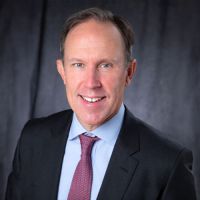 Scott BallardChief People Officer of MaineHealth