➊ Disruption as the New Normal: Technology Keeps Leadership Busy
➊ Disruption as the New Normal: Technology Keeps Leadership Busy
The CEO’s Perspective:
Executive Boards Look Outward
The CEO’s Perspective:
Executive Boards Look Outward
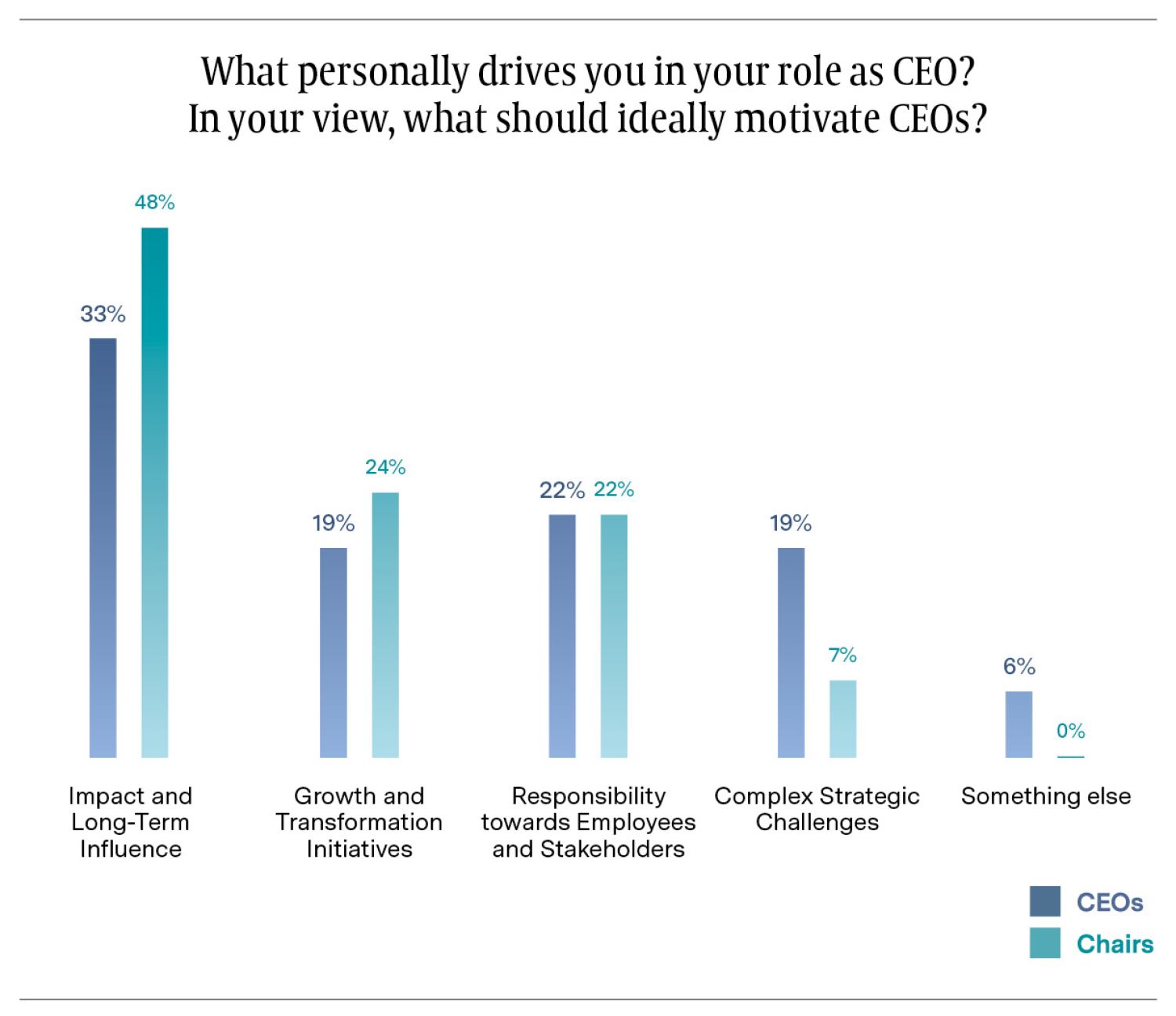
Technology, digitalization, and AI are at the top of the CEO agenda, followed by market changes and disruptions, as well as geopolitical developments. Next come the expectations of customers and stakeholders, which CEOs seek to meet. Sustainability and social responsibility, however, rank at the bottom of the agenda, with only two mentions.
Chair's Perspective:
Supervisory Board Members Look Inward
Chair's Perspective:
Supervisory Board Members Look Inward
Chairs prioritize different topics: market changes and disruptions are their top priority, followed by technology and AI, as well as talent strategy and leadership development. Consequently, they place a stronger focus on leadership issues as well as risk and resilience management than CEOs do. While CEOs tend to react to the broader political and economic climate, chairs also turn their attention to the organization’s internal structure.
➋ Leading in Uncertainty: Decision-Making Becomes a Key Competency
➋ Leading in Uncertainty: Decision-Making Becomes a Key Competency
The CEO Perspective:
What Are the Success Factors for Board Work?
The CEO Perspective:
What Are the Success Factors for Board Work?
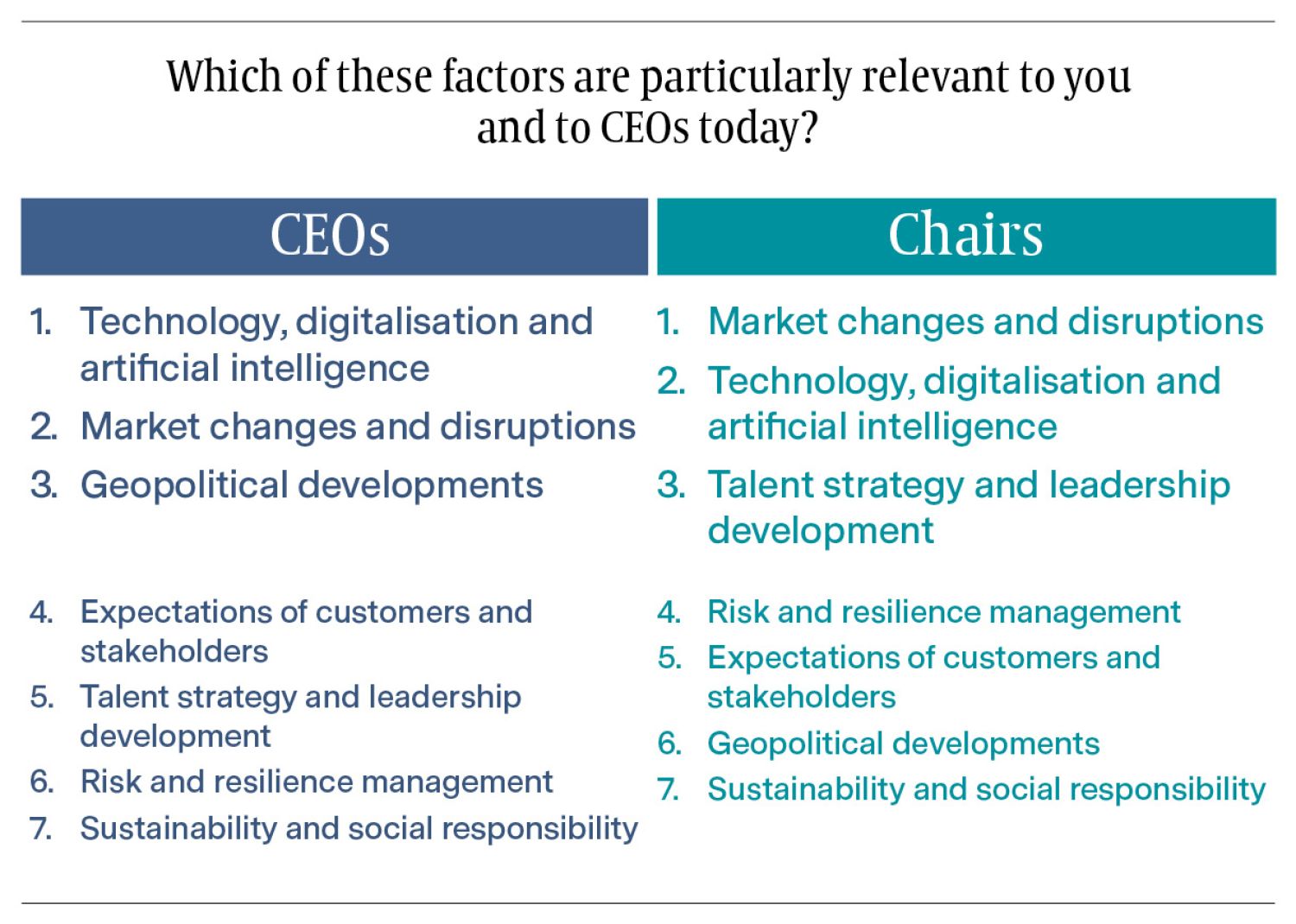
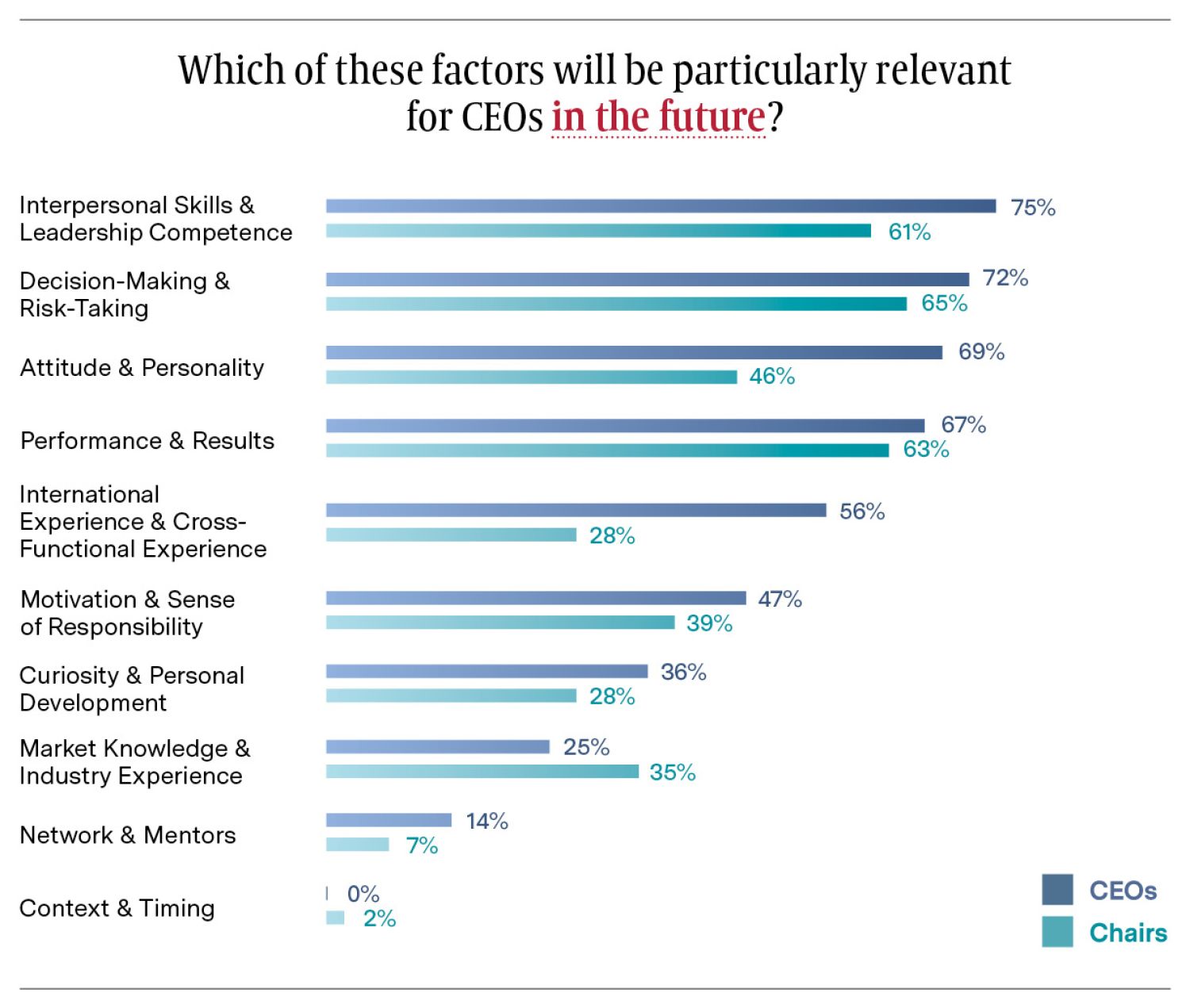
Decisiveness and a willingness to take risks—CEOs cite these two qualities with surprising prominence as essential leadership criteria. Together with “interpersonal skills & leadership competence,” they rank first among the current success factors for CEO work. That makes sense in an environment defined by constant upheaval. Forward-thinking is becoming a clear differentiator of successful leadership. CEOs must not only react to daily changes but also anticipate developments and think strategically ahead. Navigating the highly dynamic geopolitical landscape with confidence requires precisely this ability: rapid response coupled with a long-term orientation.
Chair's Perspective:
What does this mean for CEO appointments?
Chair's Perspective:
What does this mean for CEO appointments?
This raises a key question: Which skills are more important than a resume? The data shows that market knowledge and traditional industry experience are losing importance and have dropped in the Chair assessment from 52 percent to 35 percent. Instead, industry-independent leadership skills are gaining prominence—above all, relationship-building skills and leadership competence, as well as attitude and personality.
➌ Interpersonal skills are becoming a key success factor
➌ Interpersonal skills are becoming a key success factor
CEO Perspective:
The Human Factor Is Gaining Importance.
CEO Perspective:
The Human Factor Is Gaining Importance.
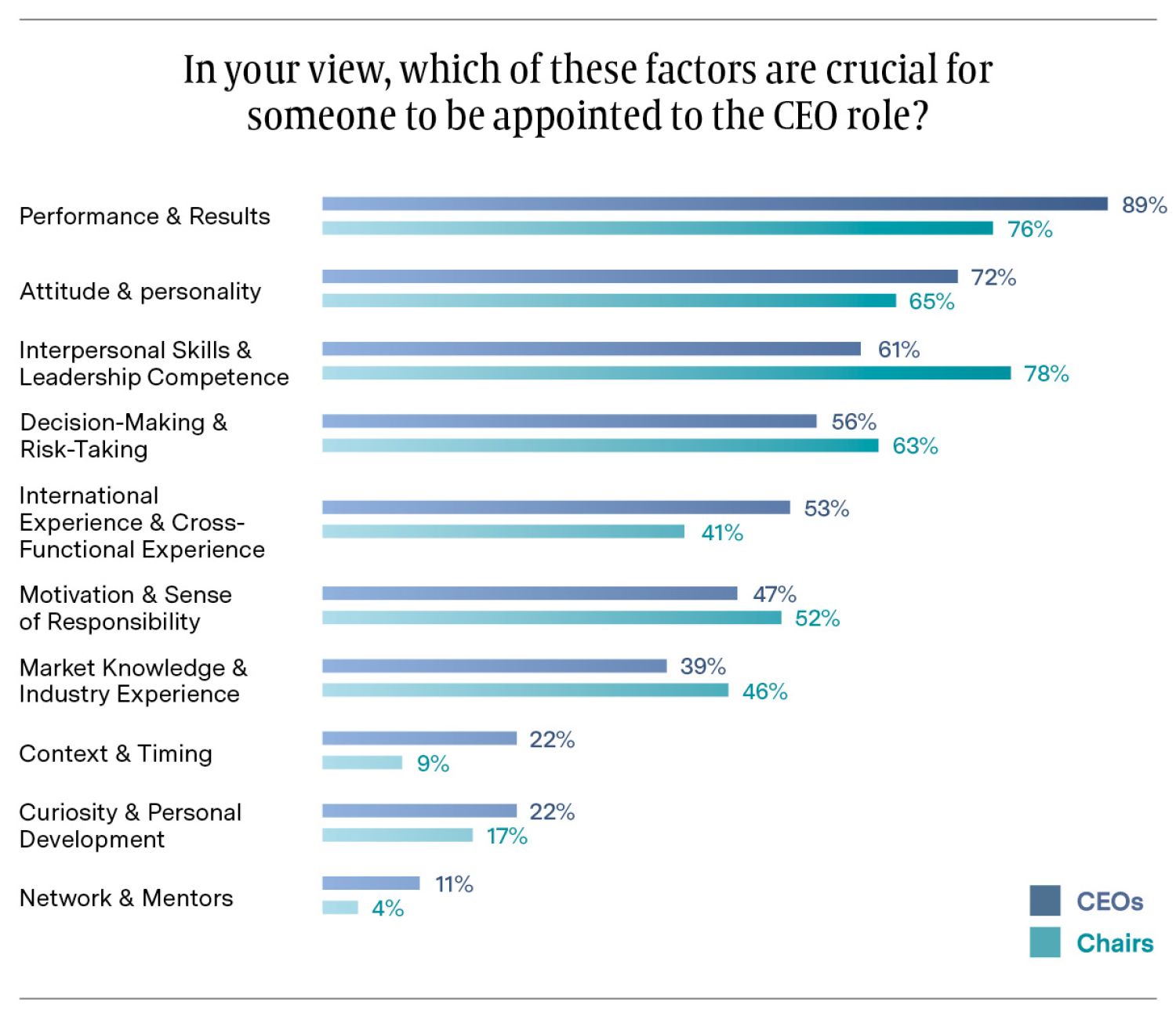
An interesting development is that Germany’s corporate leaders attach great importance to the ability to relate to others. However, CEOs often only discover this once they are already in a leadership role. The majority state that interpersonal skills and leadership competence played a less important role in their appointment. Instead, they say, performance and results were more important, based on their own assessment.
Chair's Perspective:
Leadership Ability Is Key
Chair's Perspective:
Leadership Ability Is Key
From the chairs’ perspective, the topic of leadership is also extremely important when appointing CEOs: 78 percent consider interpersonal skills and leadership competence to be crucial. This makes it clear that the focus is no longer on the traditional industry profile, but rather on the ability to make an impact in complex contexts.
In CEO appointments, boards are moving away from static hard qualifications toward assessing leadership potential. When CEOs are already in their roles, board chairs also place greater emphasis on market knowledge and industry experience; they consider these competencies to be particularly important for the future.
➍ Motivation: Effect and Impact as Drivers
➍ Motivation: Effect and Impact as Drivers
CEO Perspective:
Strategic and Intellectual Leadership
CEO Perspective:
Strategic and Intellectual Leadership
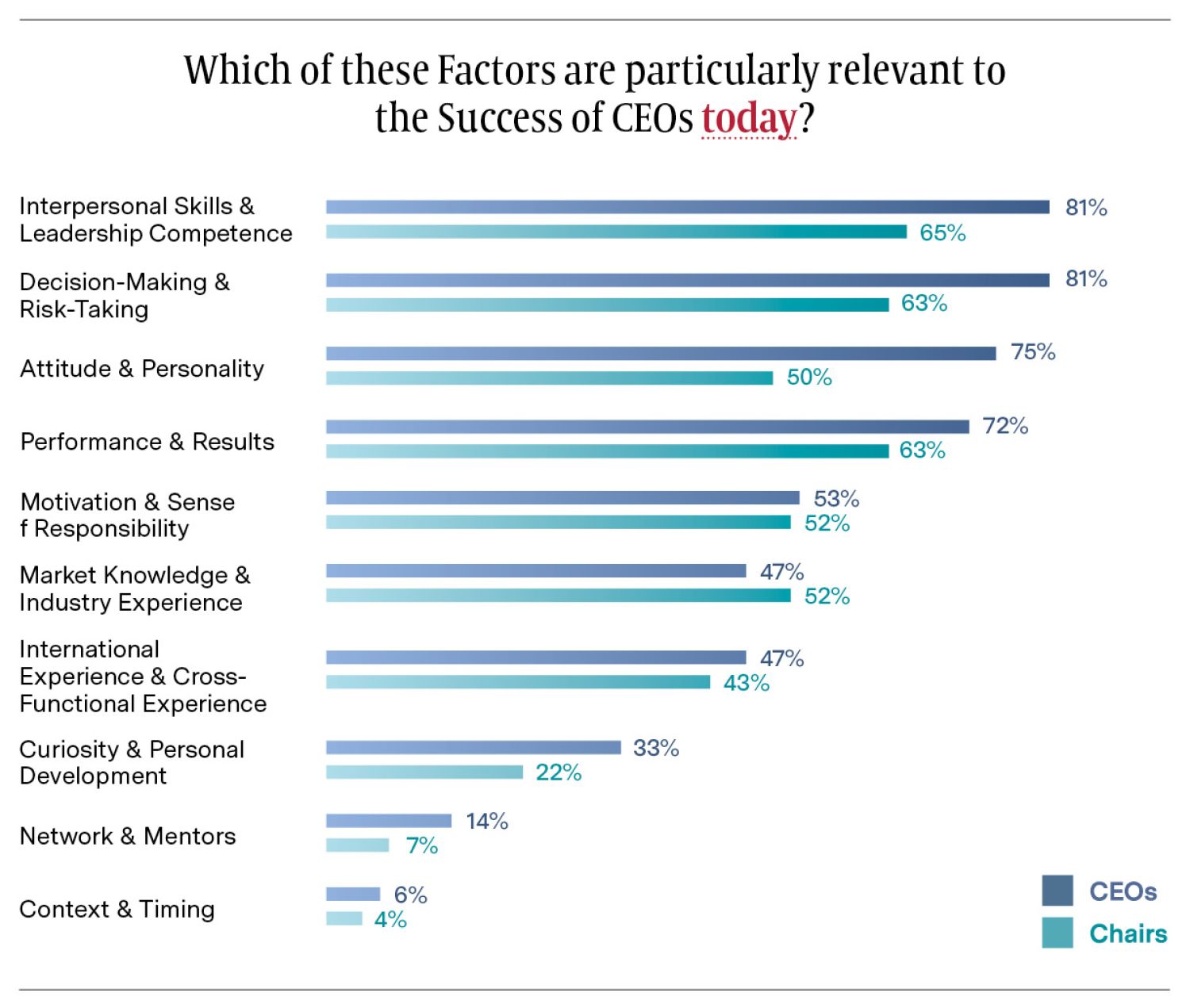
CEOs want to make a difference and achieve a long-term impact through their work. For 33 percent of them, these are primary motivators. At the same time, although CEOs acknowledge facing constant technological upheavals and market disruptions, they appear less inclined to act upon these issues themselves. When it comes to motivational factors, they cite “complex strategic challenges” and “transformation” significantly less often. For them, impact arises where they can combine decision-making under uncertainty with cultural shaping.
Chair's Perspective:
Long-Term Impact and Digitalization
Chair's Perspective:
Long-Term Impact and Digitalization
While CEOs’ motivation stems primarily from making a difference, responsibility, and long-term impact, board chairs place even greater emphasis on making a difference and long-term impact than CEOs do. The same applies to the topics of growth and transformation, which chairs indicate should motivate CEOs. Consequently, Chairs place greater value on long-term impact and digitalization, while CEOs place greater emphasis on strategic and intellectual challenges.