



Across Europe, healthcare companies are making deliberate choices about who leads their people agenda; choices that offer a clear view into how CHRO pipelines are evolving. As the stewards of people and culture, CHROs sit at the center of organizational evolution. Yet when it comes to their own succession, the path is often less structured, less visible, and far more varied.
In our recent analysis of CHRO appointments across the European healthcare industry, we found a striking pattern: 74% of CHROs are stepping into the role for the first time, and 61% are being hired externally, revealing a leadership pipeline that is both expanding and under strain.
To understand the nuances behind this shift, we examined 96 CHRO appointments across four major healthcare subsectors: Biopharma; Medical Devices and Diagnostics; Life Sciences Tools and Technologies; and Healthcare Services and Delivery. Here’s how the patterns diverge by context.
A Unifying Signal: External Hiring Continues to Dominate
A Unifying Signal: External Hiring Continues to Dominate
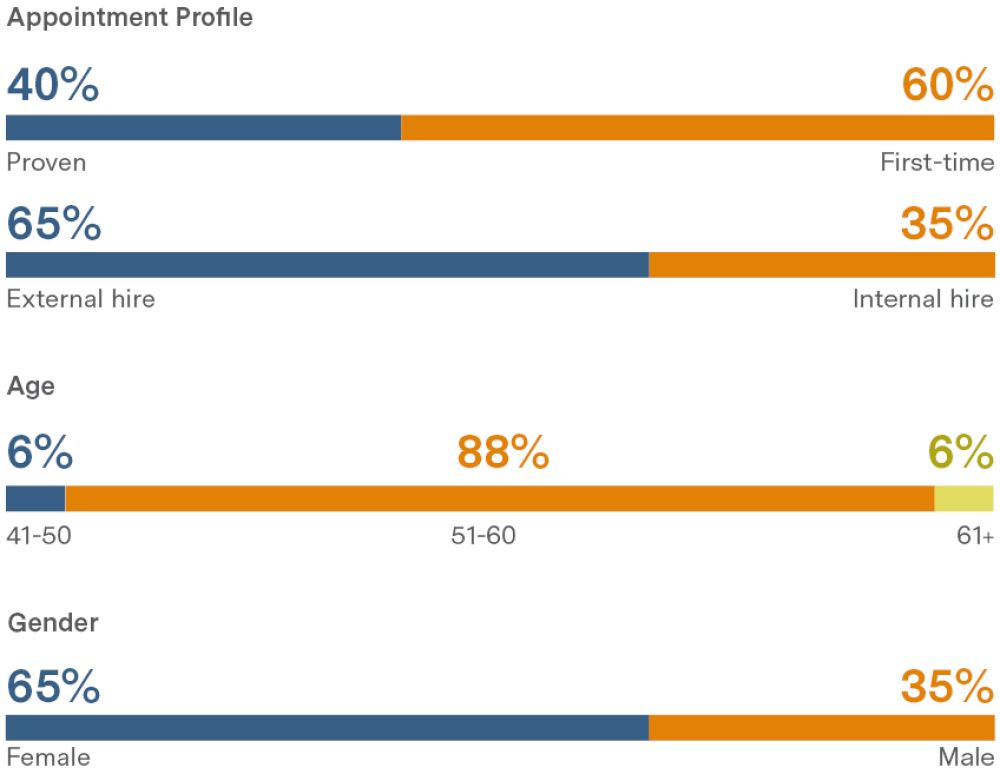
Across all four subsectors, external hiring outpaces internal promotion, signaling an opportunity to improve succession planning processes for the role.
External Hiring Outpaces Internal
Highlighting a clear need for strong CHRO succession planning.
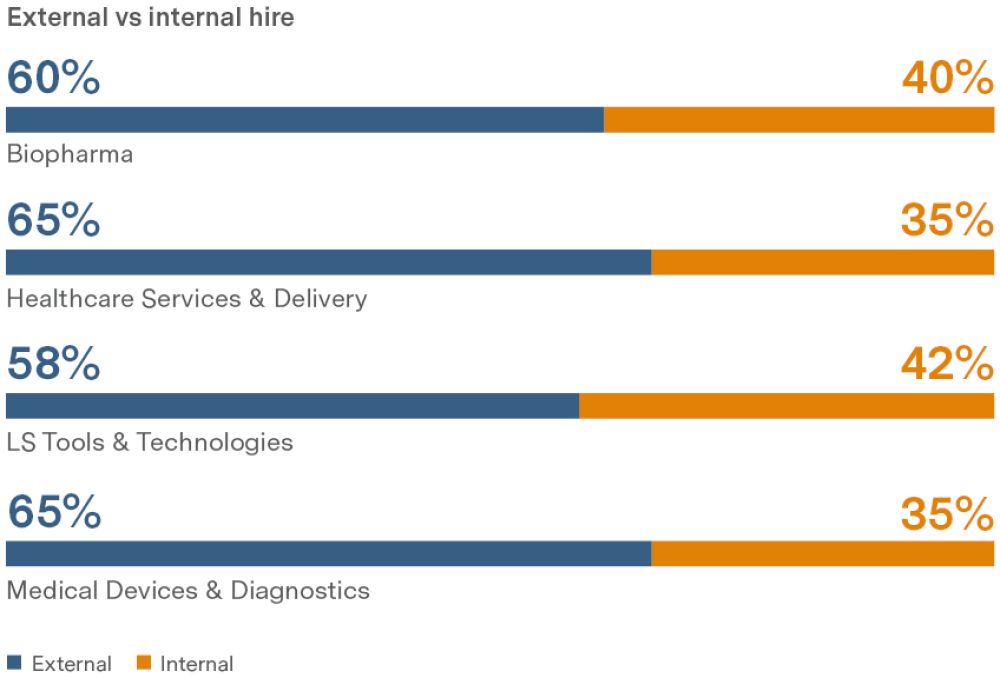
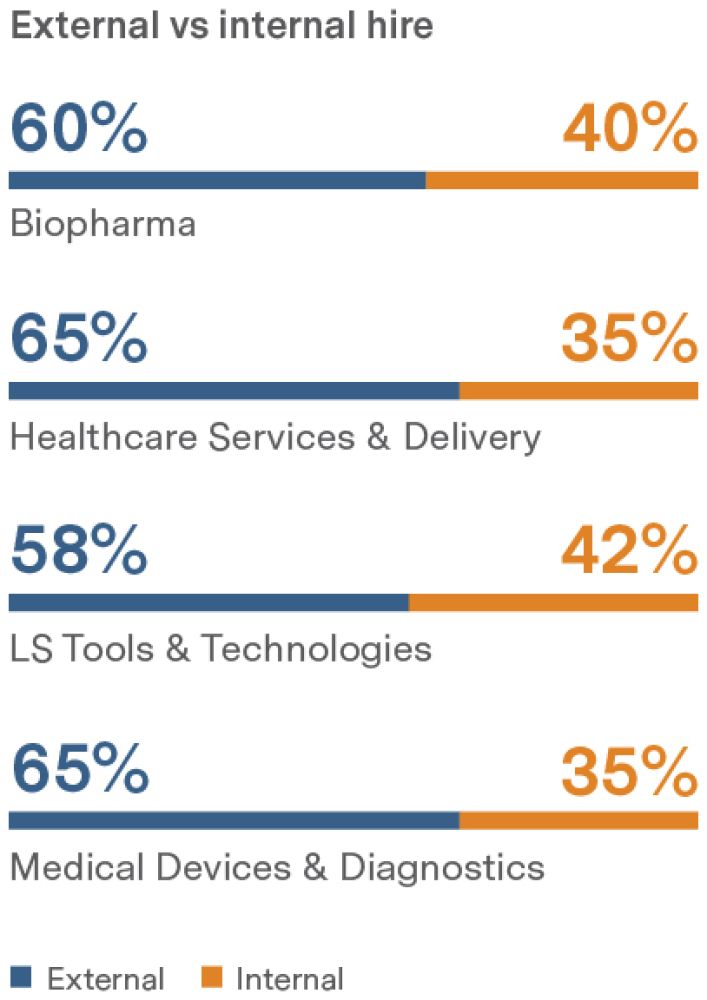
This consistency underscores a structural challenge: Internal pipelines are not producing enough succession-ready HR leaders, even in organizations with mature talent systems.
These patterns suggest that many organizations look beyond traditional internal pathways, often bringing in CHROs with broader industry or functional exposure, particularly in segments where operational complexity or transformation demands are high.
Biopharma: Deep Roots, First‑Time Leaders
Biopharma: Deep Roots, First‑Time Leaders
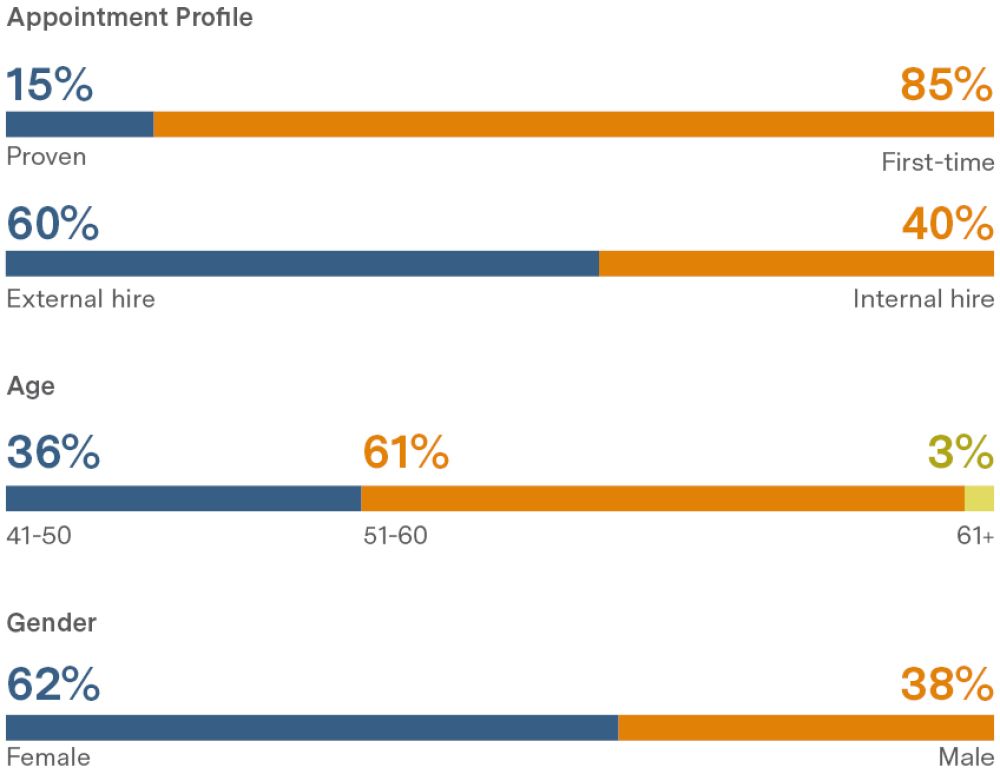
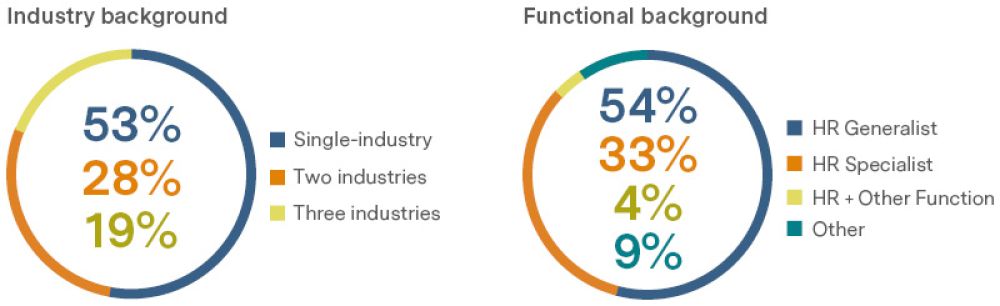
Biopharma leans heavily toward first‑time CHROs (85% of appointments) and shows a strong preference for sector continuity: 53% of CHROs here have spent their careers in a single industry.
First-Time CHRO Dominance in Biopharma
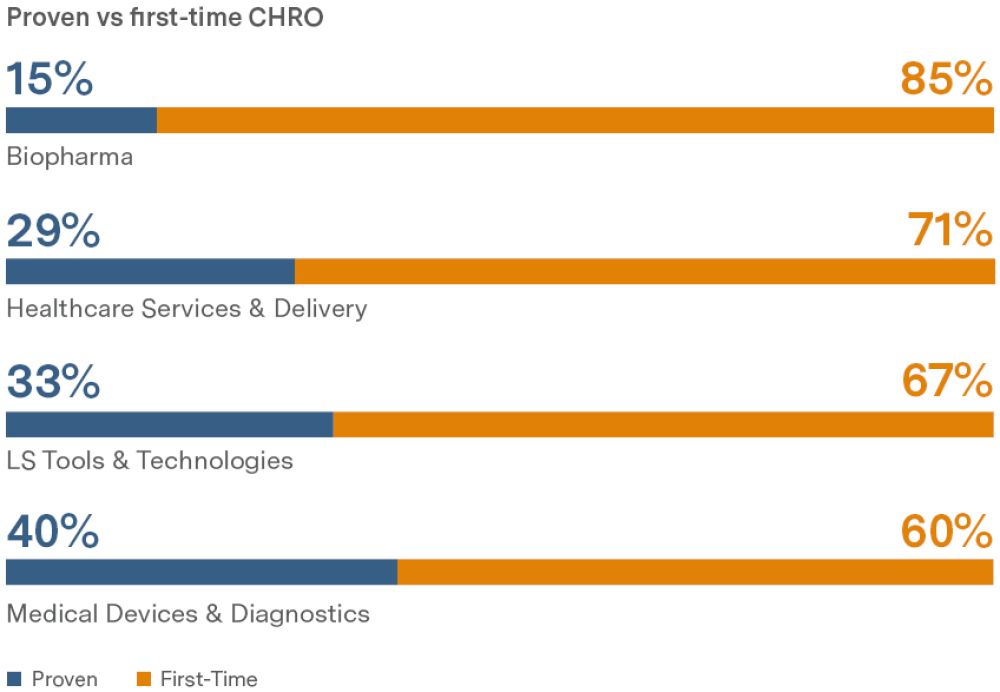
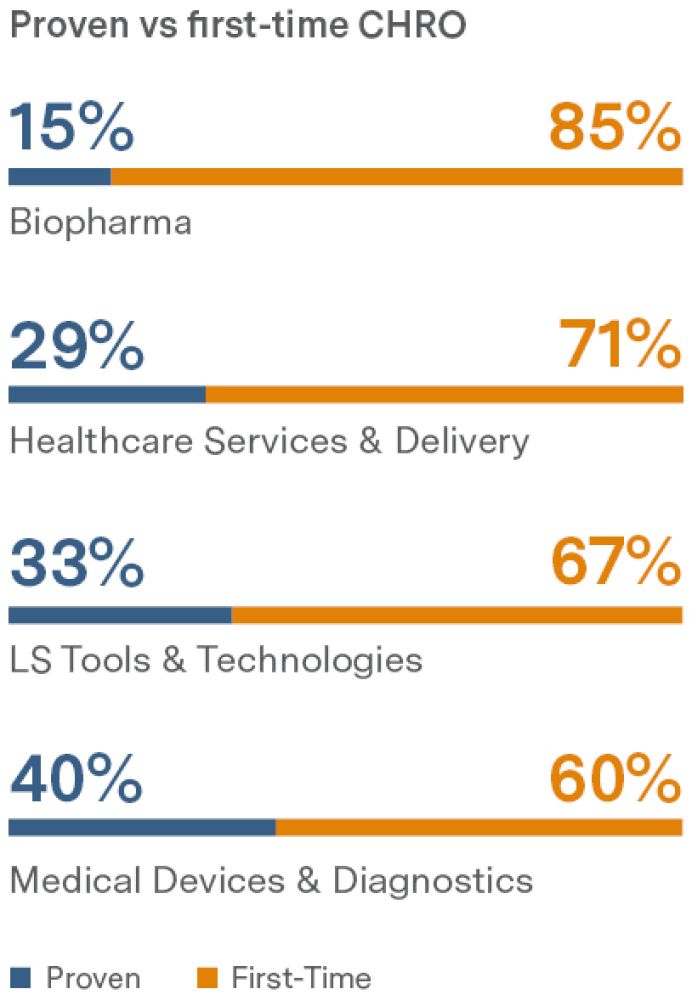
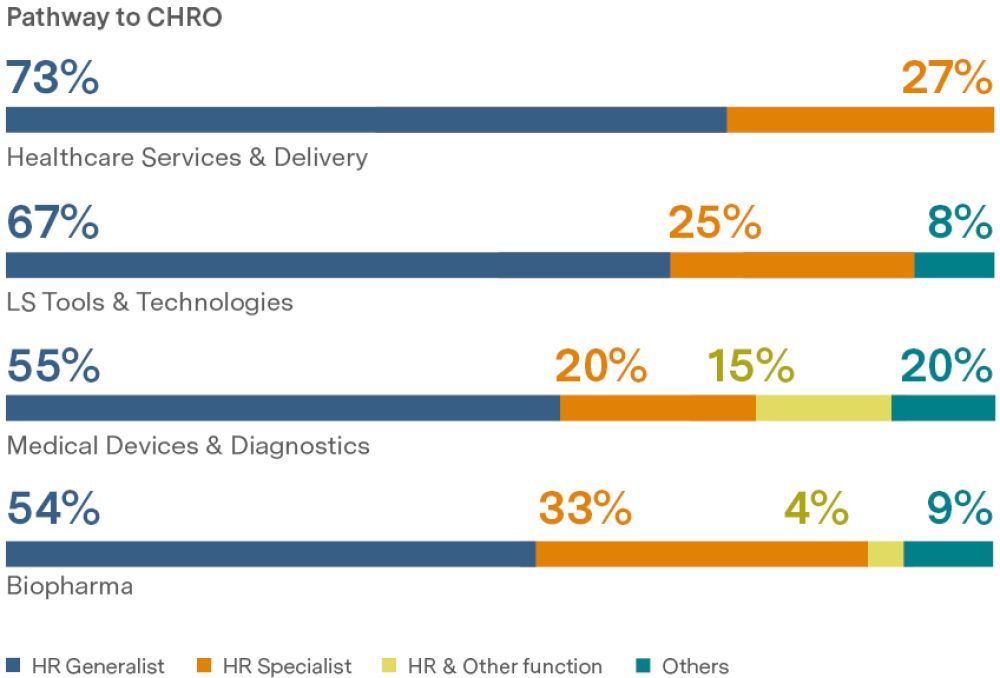
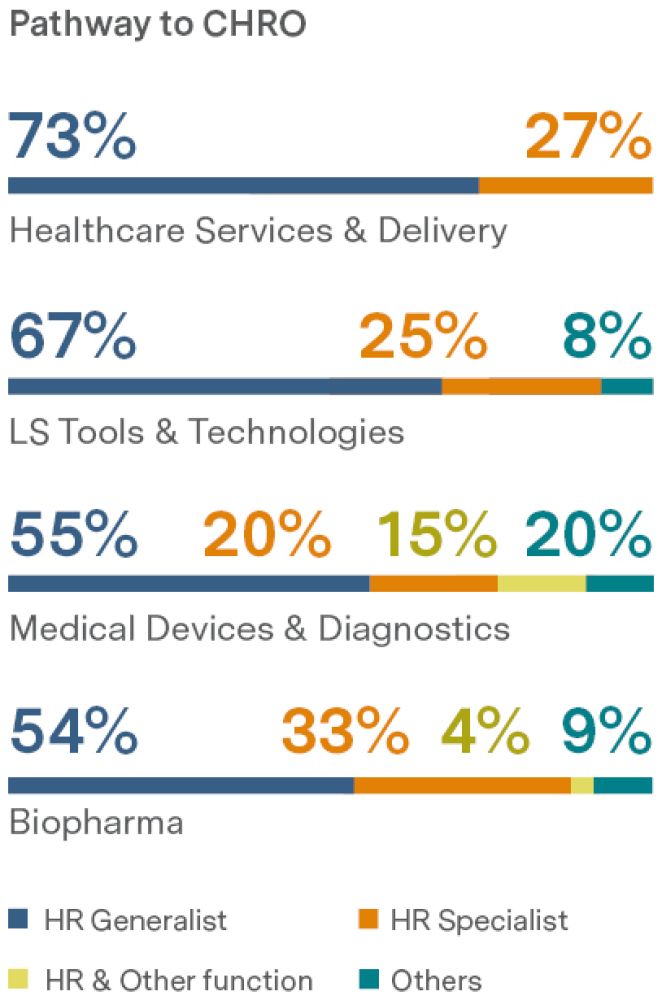
Functionally, the majority come from HR generalist roles (54%), with a further 33% from specialist tracks. Together, this points to a subsector that elevates leaders who have grown up inside the system and understand its specific rhythms, even when they are new to the top HR seat.
The Biopharma CHRO
A strong tilt toward first‑time leaders with deep, single‑industry roots
Medical Devices and Diagnostics: Seasoned Enterprise Leaders
Medical Devices and Diagnostics: Seasoned Enterprise Leaders
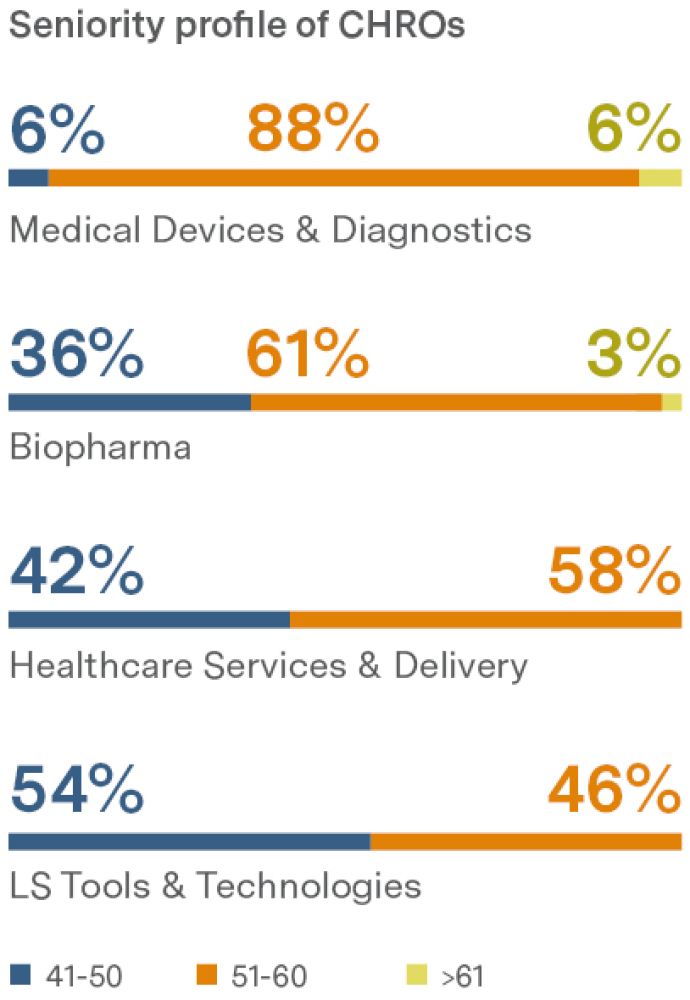
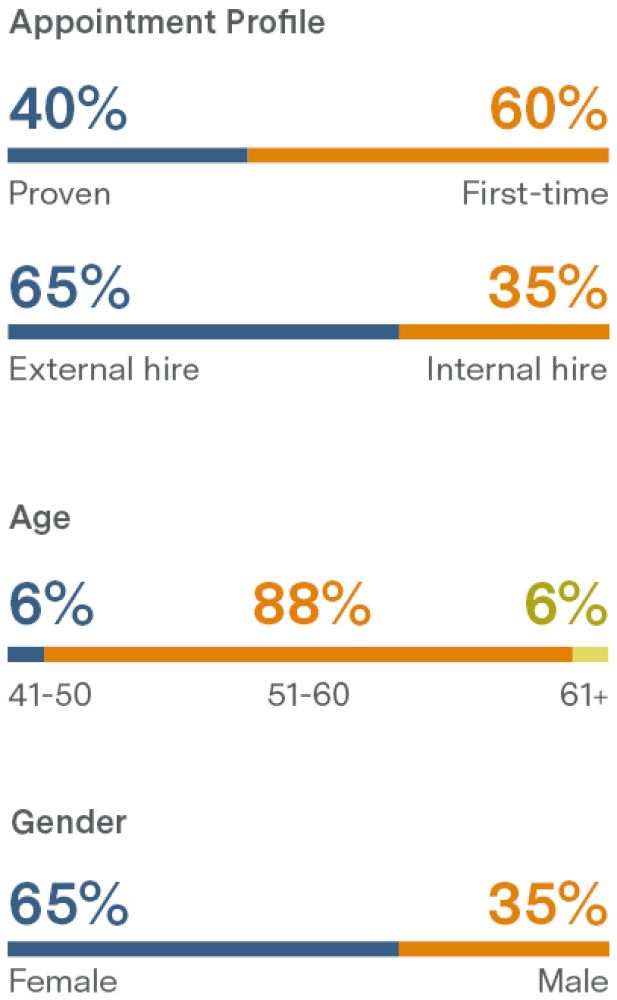
If Biopharma leans toward emerging leaders, Medical Devices and Diagnostics (MD&D) takes a different path. This subsector has the most senior age profile, with about 88% of CHROs between 51–60 and only 6% in the 41–50 range. It also shows a higher share of proven CHROs, with 40% having held the role before.
Preference for Senior Leaders
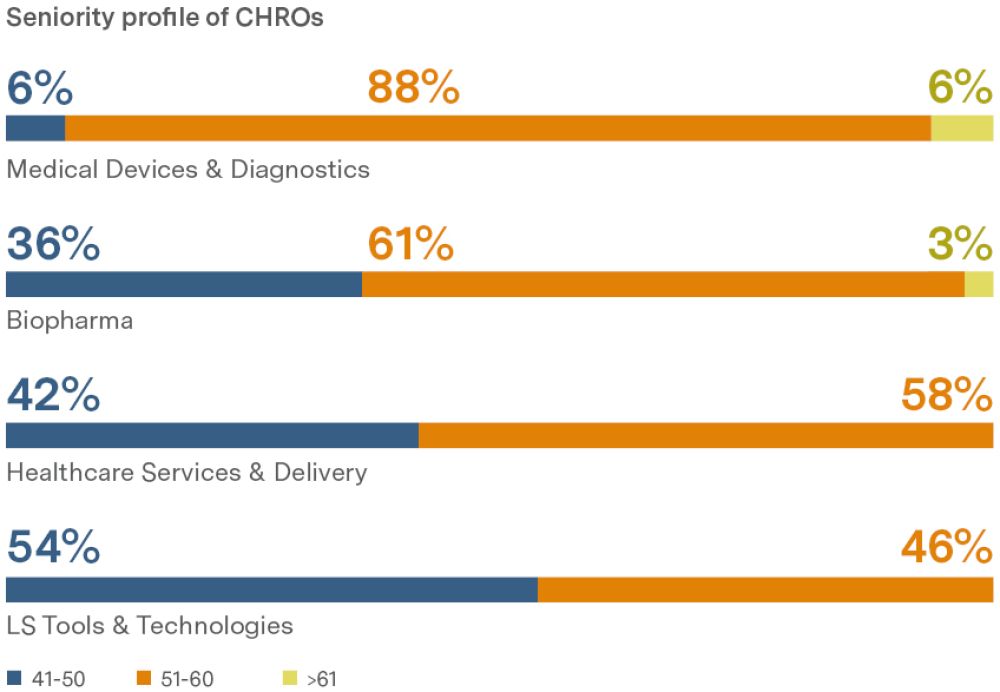
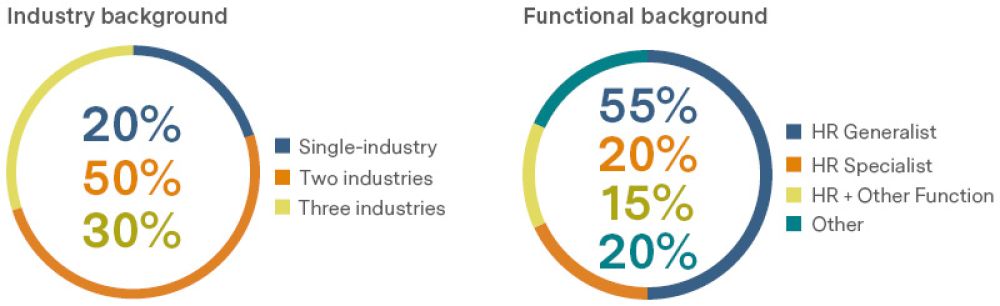
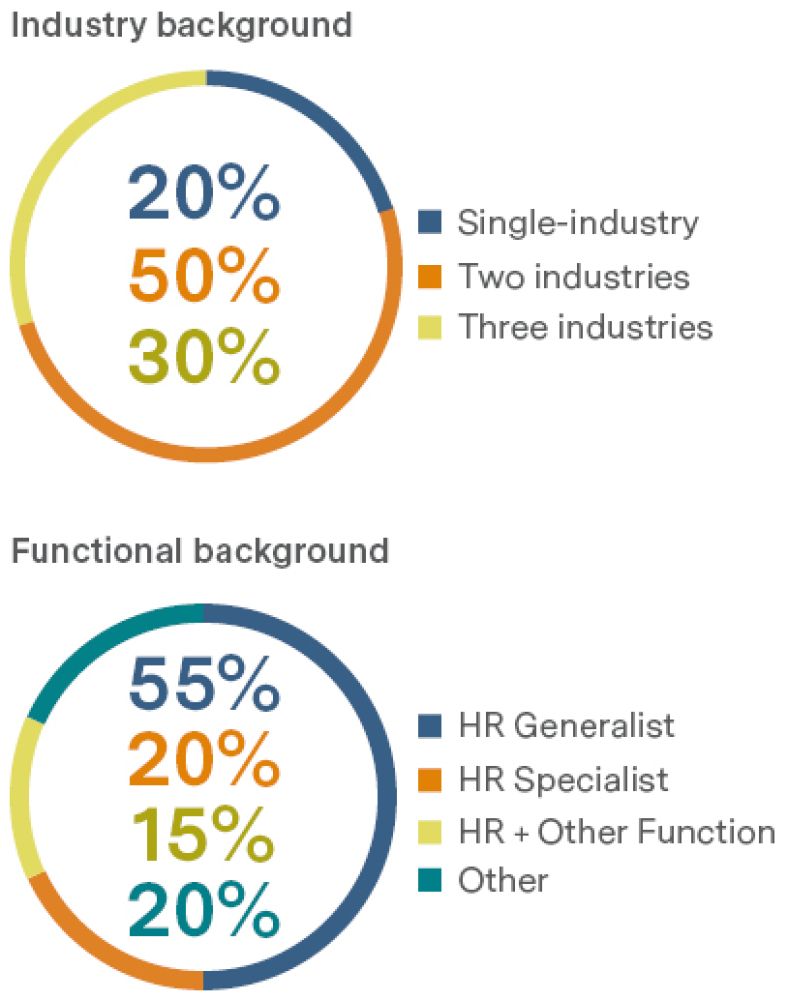
MD&D is also the segment with the broadest experience outside HR, as 35% of CHROs have worked outside HR, most often in commercial, operational, or transformation roles.
These patterns point to a subsector that favors leaders with substantial enterprise experience and a track record of navigating complexity, rather than those who have spent their careers solely within HR.
The Medical Devices and Diagnostics CHRO
Seasoned, enterprise‑bred CHROs with the highest share of proven leaders and notable non‑HR exposure
Life Sciences Tools and Technologies: Hybrid, Dual-Speed Talent
Life Sciences Tools and Technologies: Hybrid, Dual-Speed Talent
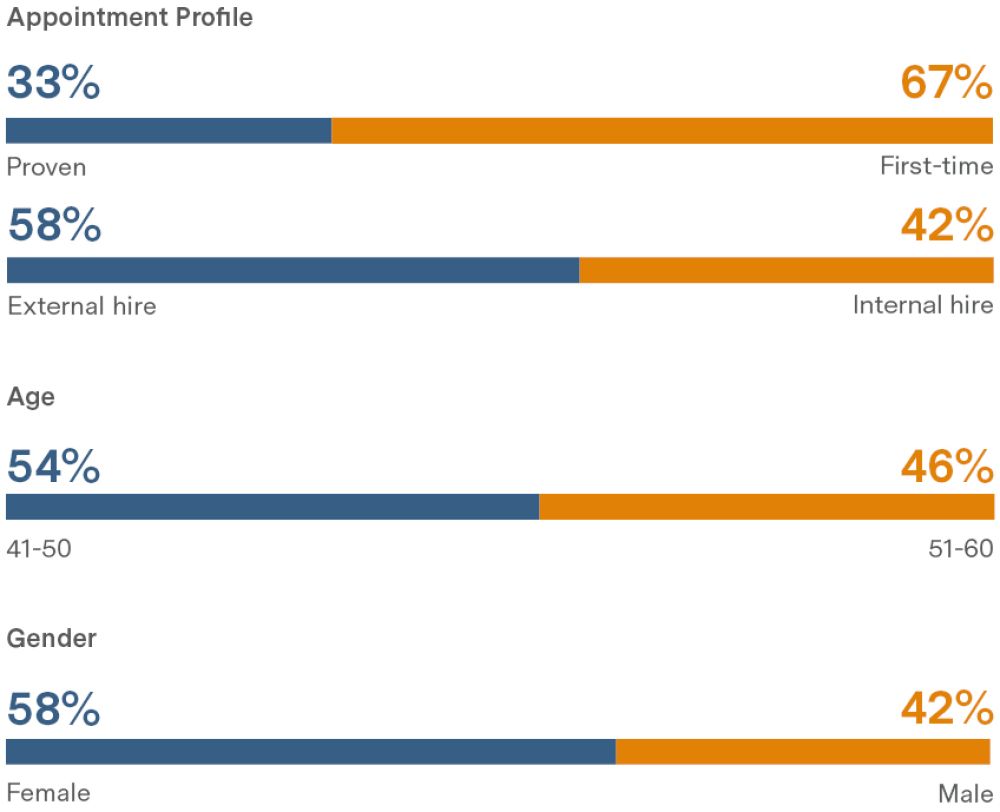
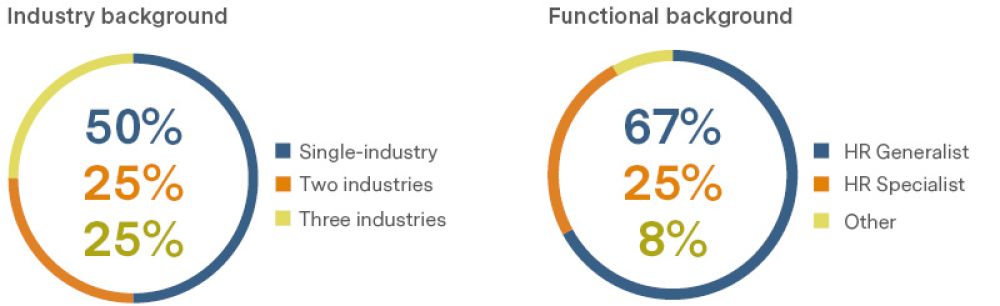
Life Sciences Tools and Technologies (LS Tools) presents a more mixed leadership profile compared with the other subsectors we analyzed. Half of its CHROs have built their careers in a single industry, while the other half bring experience across two or three sectors.
Multi-Sector Exposure
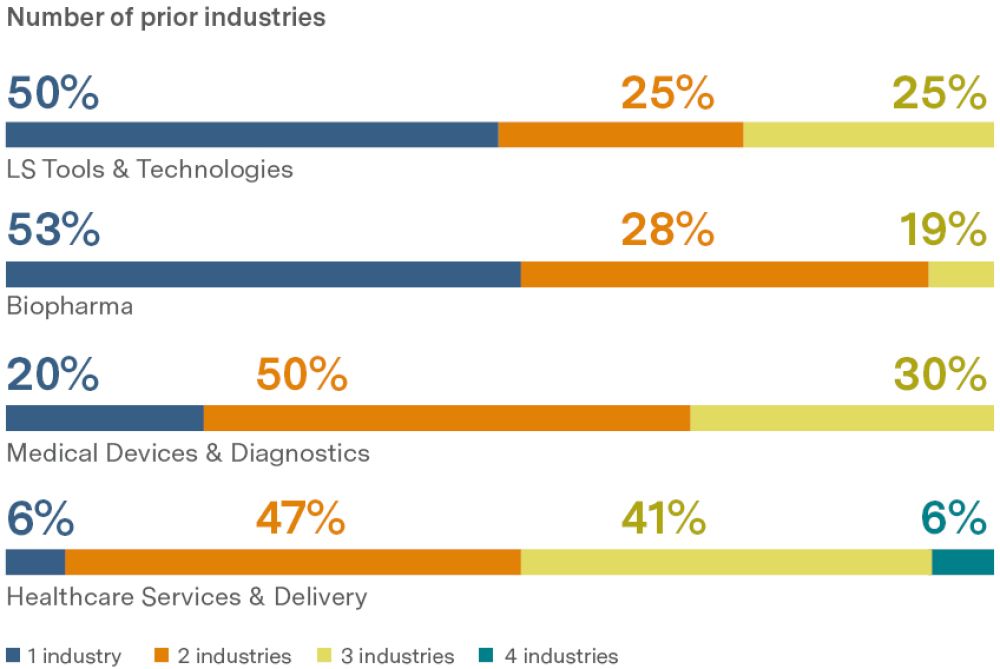
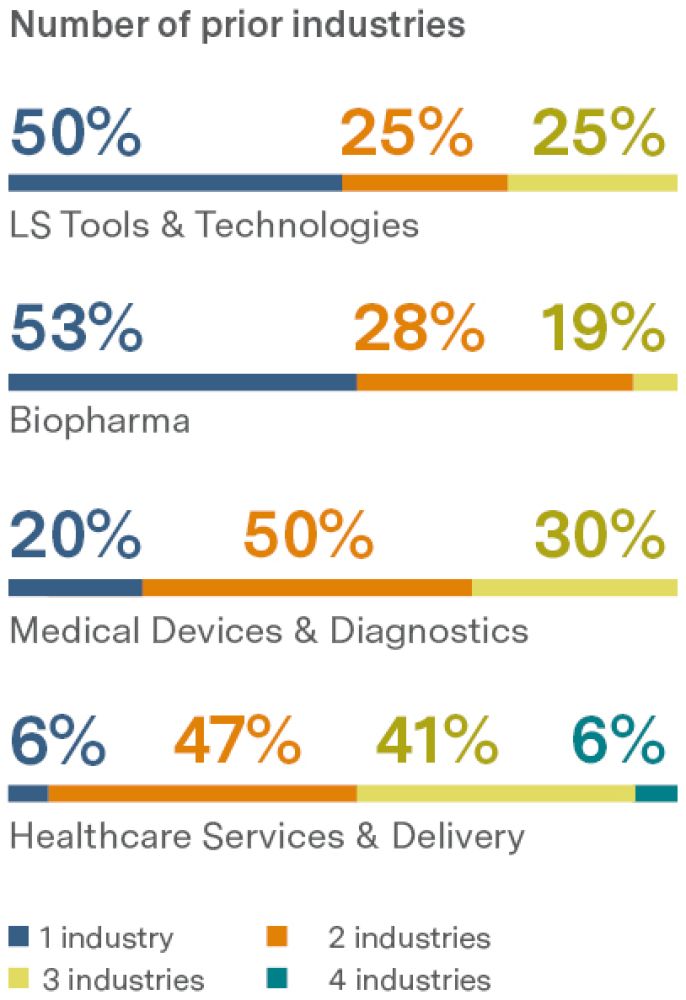
Functionally, LS Tools remains generalist‑leaning, with 67% of CHROs coming from broad HR roles and a smaller group (25%) from specialist backgrounds. LS Tools also continues to appoint a high share of first‑time CHROs (67%), though it shows a slightly larger proportion of proven leaders than Biopharma.
Taken together, this subsector appears to favor CHROs who can navigate both operational discipline and the demands of high‑growth environments, leaders capable of scaling organizations without losing momentum. LS Tools reflects a hybrid leadership market: part scale-up, part industrial backbone.
The Life Sciences Tools and Technologies CHRO
A hybrid profile that balances single‑industry depth with cross‑sector range and favors adaptable builders
Healthcare Services and Delivery: Multi-Sector CHROs
Healthcare Services and Delivery: Multi-Sector CHROs
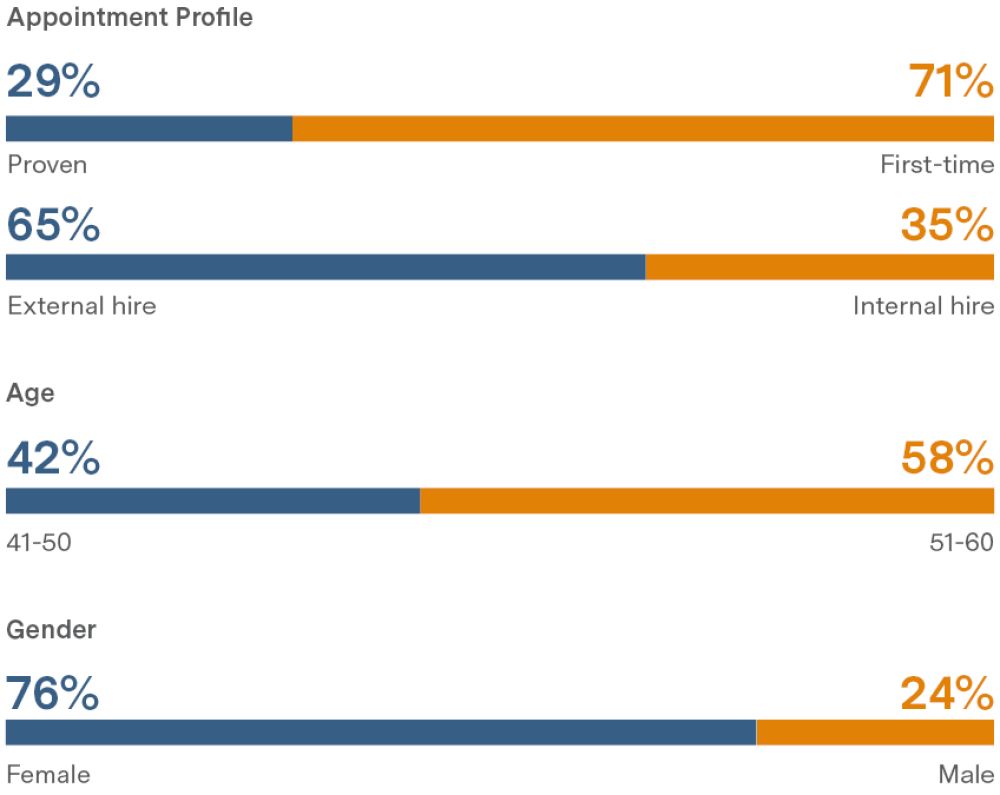
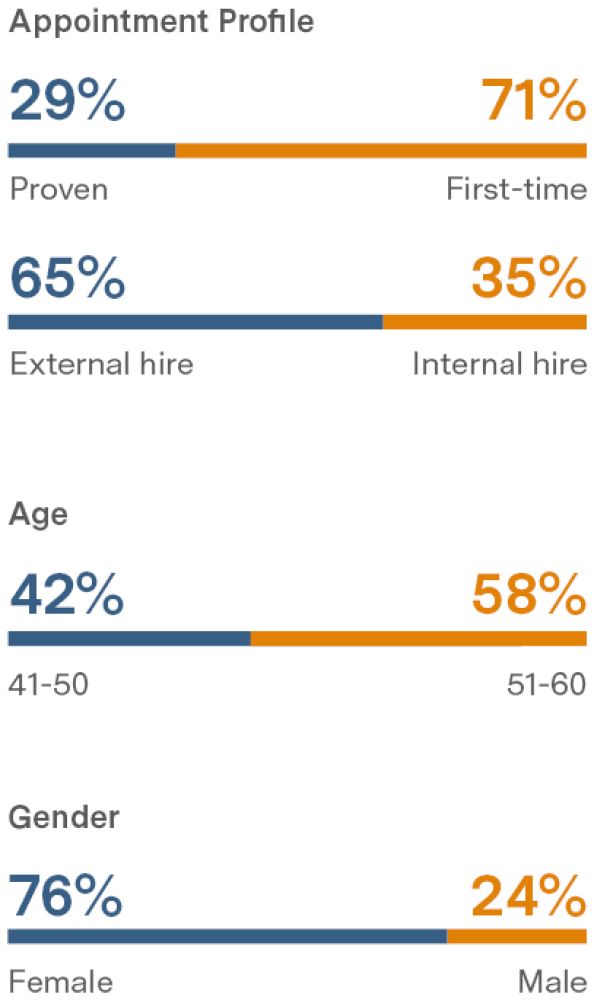
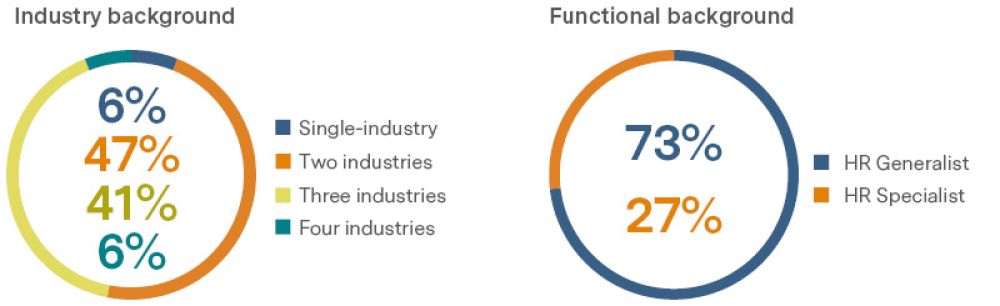
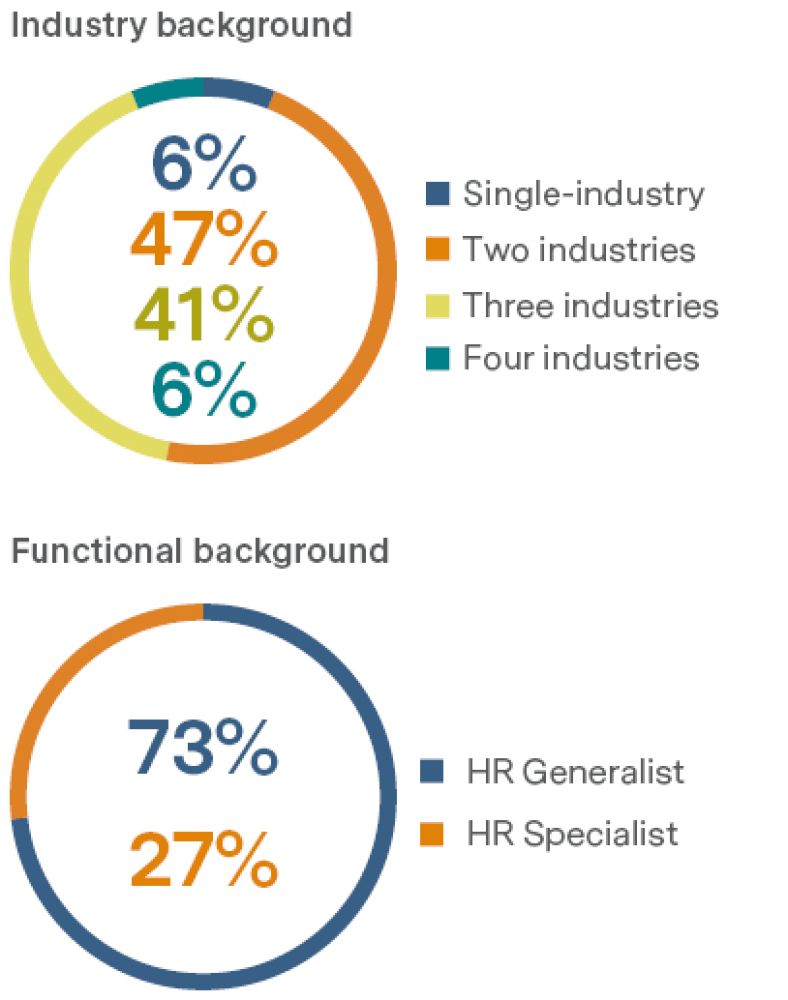
Healthcare Services and Delivery is the subsector that differs more clearly from the rest of the industry. Ninety‑four percent of CHROs here have experience outside healthcare, and many have worked across two or three different industries, often in service‑heavy or customer‑centric environments. External hiring is also high (64.7%), reflecting the ongoing evolution of service delivery models and the operational intensity of managing large frontline workforces.
What also stands out in this segment is the strong functional consistency: 74% of CHROs come from HR generalist backgrounds, the highest share across all subsectors. This suggests that Services organizations rely heavily on leaders with broad, end‑to‑end HR capability, people who can move fluidly between talent, labor, culture, and operational HR demands.
Pathway to CHRO
Together, these patterns suggest that this subsector may look for CHROs who can operate at the intersection of labor‑intensive environments, consumer expectations, and intensive operations.
This is also the only subsector where female representation is even higher than the already strong healthcare average, making it the most gender‑diverse CHRO cohort in the dataset.
The Healthcare Services and Delivery CHRO
The most multi‑industry, service‑honed CHROs
The Path Ahead for CHRO Pipelines
The Path Ahead for CHRO Pipelines
Our analysis makes clear that CHRO succession in healthcare cannot be treated as a one-size-fits-all exercise. Preparing for the future means looking beyond the usual talent pools, spotting potential in new places, and creating clear pathways for internal leaders.
As our broader industry analysis shows, the real work lies in rethinking how HR leaders are developed. In Biopharma, where 85% of CHROs are in the number one role for the first time but over half have spent their entire careers in-sector, depth of scientific and R&D context clearly matters. Here, succession pipelines need to foster long-term sector immersion, ensuring future CHROs can effectively support innovation cycles, product launches, and the attraction and retention of specialist scientific talent. In contrast, in Medical Devices and Diagnostics, CHROs tend to be more senior, less often first-time leaders, and more likely to bring experience outside HR. Succession in this subsector therefore benefits from broader enterprise exposure—particularly experience navigating complexity across manufacturing, supply chain, and global field sales environments.
The picture is more mixed in Life Sciences Tools, where people leaders come from a wide range of backgrounds: around half with experience in a single industry and half across two or three sectors, and a high proportion stepping into the CHRO role for the first time. There may be a need for succession models that balance operational discipline with the demands of scaling globally distributed, technically oriented commercial and service workforces. Meanwhile, Healthcare Services stands apart. With 94% of CHROs bringing experience from outside healthcare and the highest prevalence of HR generalist backgrounds, succession here must prioritise leaders who can manage scale, cost pressure, and large frontline workforces, while—particularly in private equity-backed organizations—playing a central role in value creation, post M&A integration, and culture shaping.
Across all subsectors, the implication is consistent: CHRO succession must be grounded in business context and workforce reality. Organizations need to tailor their approach, intentionally balancing external hiring with a strong internal bench, using subsector-specific benchmarks to define the capabilities that truly matter. Cross-sector experience should be added thoughtfully, where it accelerates the development of skills that cannot be built fast enough internally. And just as CHROs invest heavily in CEO and C-suite succession, the most effective leaders are those who apply the same discipline to planning for their own successors—ensuring continuity, adaptability, and leadership readiness across the healthcare ecosystem.
Get in Touch
Get in Touch
If your organization wants to approach CHRO succession more strategically, we’re here to help you think it through. Learn more about our Human Resources practice and get in touch.
